Butcher block countertops have long been cherished for their classic appeal, timeless elegance, and exceptional functionality in any kitchen. They infuse a natural warmth and rustic charm that can transform an ordinary space into a inviting culinary haven. However, like any heavily used surface, they are susceptible to the wear and tear of daily life, accumulating scratches, stains, and dents over time. If you find yourself gazing at your butcher block with a sigh, wondering how to restore its original beauty, you’ve landed in precisely the right place!
The good news is that revitalizing your butcher block countertops is not only incredibly straightforward but also a budget-friendly way to give your kitchen a significant refresh. There’s no need for costly replacements or professional intervention. This comprehensive guide will walk you through easy-to-follow steps to refinish your butcher block countertops, whether it’s your first time tackling such a project or you’re simply looking for a refresher. We’ll cover the essential products to use, delve into effective maintenance strategies, and share expert tips to ensure your countertops remain stunning for many years to come.
Understanding Butcher Block: More Than Just Wood
It’s a common misconception that all wood countertops are “butcher block.” While they are indeed made of wood, the defining characteristic of butcher block lies in its unique construction. Unlike solid slabs of wood, which can be prone to warping or cracking, butcher block countertops are crafted by meticulously gluing together thick, straight cuts of wood. These individual wood pieces are bonded under high pressure, forming a remarkably sturdy, durable, and aesthetically pleasing slab. This specialized construction technique is what makes butcher block exceptionally resilient and suitable for direct food preparation, much like a traditional cutting board.
The name “butcher block” originates from their historical use in butcher shops, where their robust surfaces were ideal for cutting and preparing meat. Today, they are beloved in home kitchens for their versatility, offering a hygienic and beautiful surface for all types of food prep, from chopping vegetables to kneading dough. Common wood species used for butcher block include maple, oak, walnut, and cherry, each offering distinct grain patterns and color variations to complement any kitchen design.
The Enduring Benefits of Butcher Block Countertops
Butcher block countertops stand out as one of the most beautiful, functional, and surprisingly affordable countertop options available, especially for the DIY enthusiast. Their natural wood grain introduces an organic element that instantly adds warmth, texture, and character to any kitchen, creating an inviting atmosphere that other materials often struggle to replicate. Beyond aesthetics, their inherent advantages are numerous:
- Affordability: Compared to granite, quartz, or marble, butcher block is significantly more budget-friendly, making it an excellent choice for stunning kitchen makeovers without breaking the bank.
- DIY-Friendly Installation: Butcher block slabs are readily available at most home improvement stores and can be cut, shaped, and installed with basic woodworking tools. This accessibility empowers homeowners, even those new to DIY projects, to achieve professional-looking results. We’ve personally cut and installed them multiple times over two decades, most recently transforming an outdated office area into a stunning butler’s pantry.
- Durability and Longevity: With proper care and occasional refinishing, butcher block can last for decades, often outliving other countertop materials. Its ability to be sanded and re-sealed means it can be restored to pristine condition countless times.
- Natural Warmth and Sound Absorption: Wood naturally adds a cozy, welcoming feel to a kitchen. It also helps absorb sound, contributing to a quieter and more pleasant environment.
- Hygienic Properties: Research has shown that wood naturally possesses antibacterial properties, making it a safe surface for food preparation when properly maintained and oiled.
- Environmentally Conscious Choice: As a renewable resource, wood is an eco-friendly option. Many butcher block products are made from sustainably harvested timber.
Can You Really Refinish Butcher Block Countertops? Absolutely!
The answer is a resounding yes! If the surface of your beloved butcher block countertops has started to show signs of wear – be it an accumulation of scratches, stubborn stains, or minor gouges – there’s absolutely no need to despair or consider costly replacements. Butcher block is inherently designed for refinishing, allowing you to restore its original luster and pristine condition with a little effort and the right approach. With proper care and the simple techniques we’re about to share, you can make your countertops look stunningly gorgeous again in just a few hours.
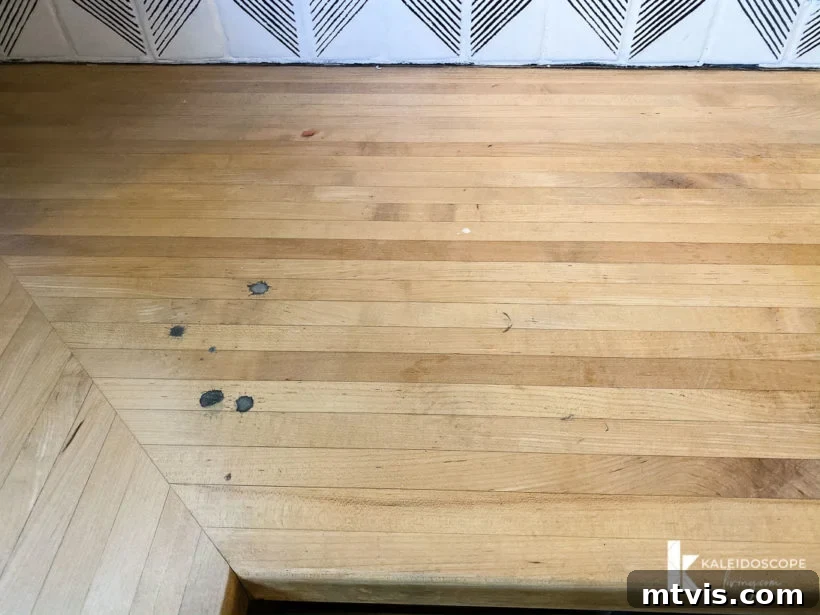
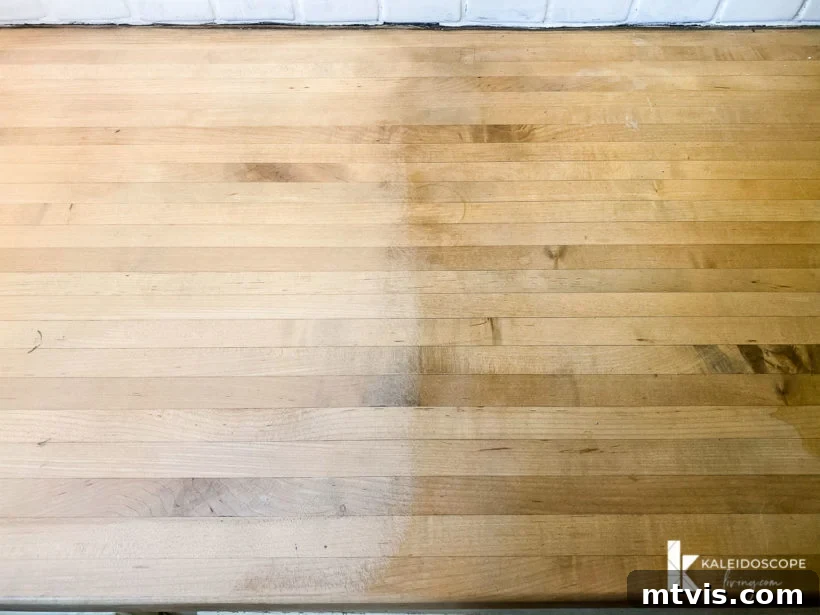
This countertop revival project was a highlight of a budget-friendly kitchen makeover we completed, demonstrating the incredible impact for a minimal investment, less than $30. Before its first coat of stain, the countertops were visibly scratched, stained, and quite beat up, as you can see in the “before” photo below. The transformation was truly remarkable, breathing new life into the entire kitchen.
This post contains affiliate links for your convenience. Click here for my full disclosure policy.
Your Step-by-Step Guide to Refinishing Butcher Block Countertops
Refinishing your butcher block countertops is a rewarding DIY project that is both quick and easy. You’ll be amazed by the dramatic results achieved in just a couple of hours. This method is also perfectly suitable for butcher block table tops or any other butcher block surface in your home.
Essential Materials Needed
Gathering your tools and materials before you begin will make the process smooth and efficient:
- Electric Orbital Sander: This is an invaluable tool for quickly and evenly removing the old finish and surface imperfections. Our favorite model makes quick work of sanding.
- Sandpaper: You’ll need a progression of grits: 60-grit (coarse for heavy removal), 100-grit (medium for smoothing), and 150-grit (fine for a silky finish).
- Shop Vac: Essential for keeping your workspace clean and minimizing sawdust, which can impede sanding effectiveness and create a mess.
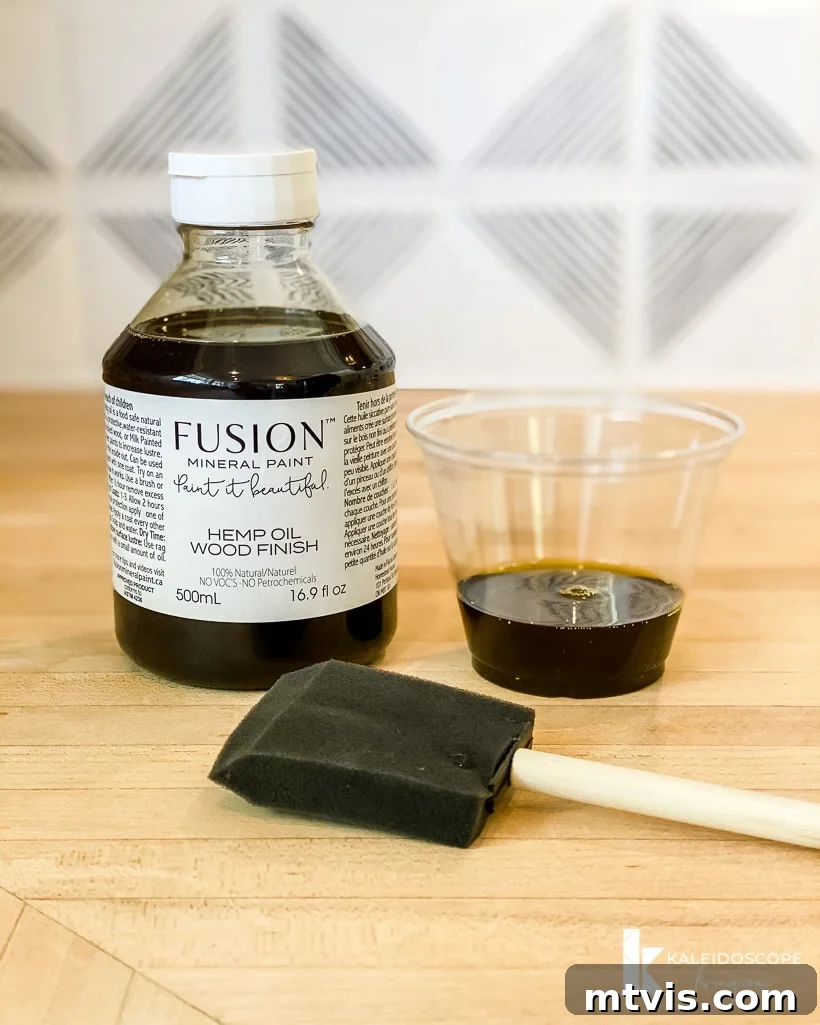
- Hemp Oil for Wood: A food-safe, non-toxic finish that deeply penetrates and protects the wood while enhancing its natural beauty.
- Foam Paintbrush: Ideal for applying the hemp oil smoothly and evenly.
- Old T-shirt or Rags: For wiping away dust and buffing the oil finish.
Time needed: 2 hours
Transform your worn butcher block countertops in just a couple of hours with this simple refinishing guide. You’ll be amazed at the stunning, like-new results!
- Step 1: Prep Your Workspace for Success
Begin by completely clearing your countertops of all items. This includes small appliances, decor, and anything that might get in the way. For added protection, especially if your backsplash is new or delicate, use painter’s tape to carefully tape off the edges where the countertop meets the backsplash. This prevents accidental contact with the sander and keeps dust contained. We had just finished painting the tile backsplash, so we were extra meticulous!
- Step 2: The Art of Sanding for a Flawless Finish
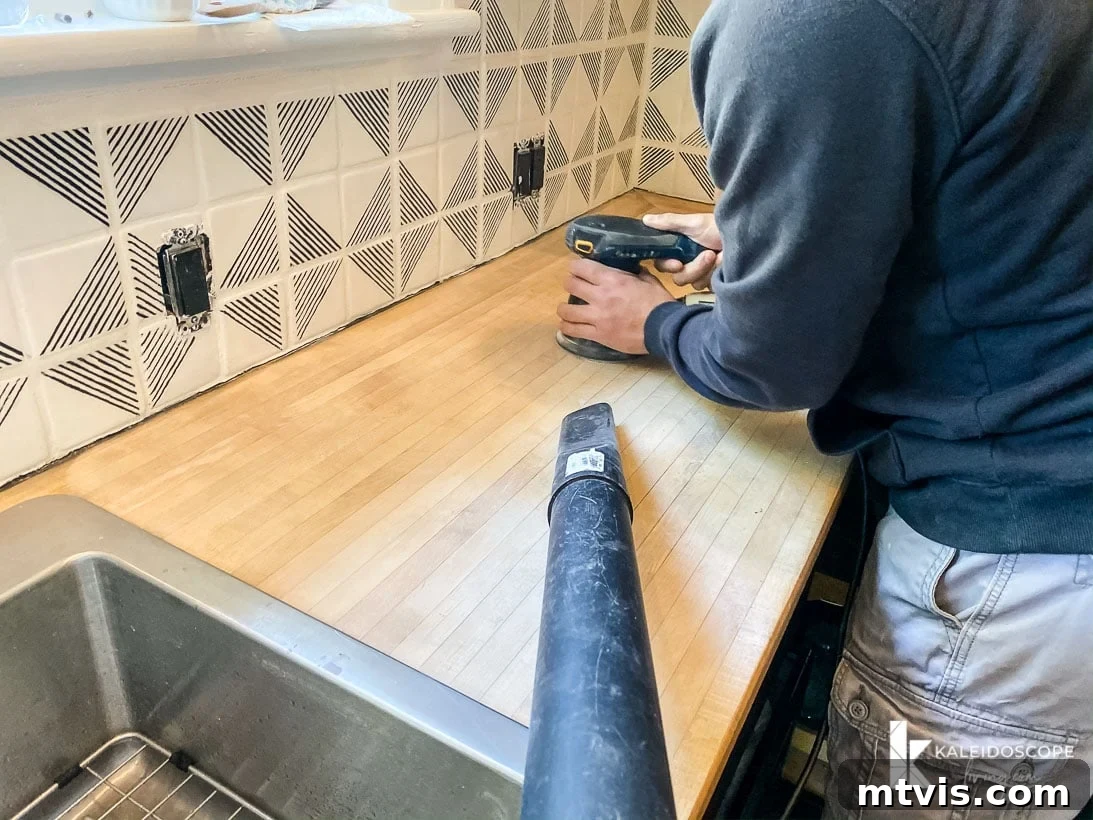
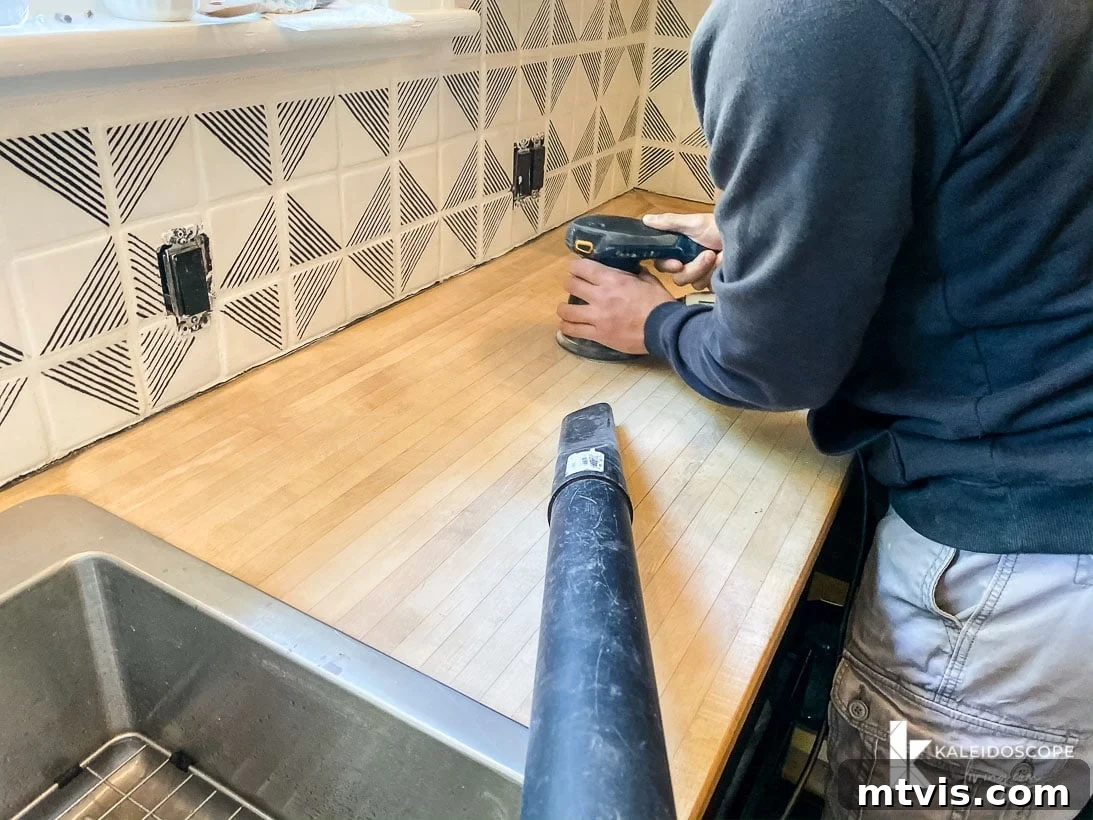
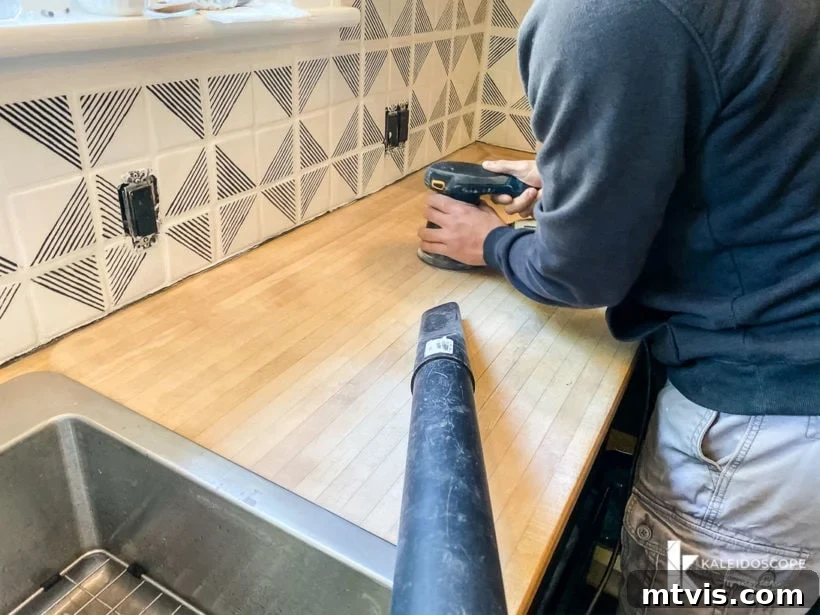
Now it’s time to begin the transformative sanding process. An electric orbital sander is your best friend here, making the task quick and efficient. Start with 60-grit sandpaper; this coarse grit is crucial for effectively removing deep scratches, burn marks, knife gouges, or stubborn stains on the butcher block surface. Apply steady, even pressure and move the sander in smooth, overlapping passes. Be mindful not to over-sand in one spot, which could create an uneven dip. Once major imperfections are gone, switch to 100-grit sandpaper and sand the entire countertop surface to smooth out the coarser scratches from the 60-grit. Finally, complete the sanding with 150-grit sandpaper across the entire surface until it feels wonderfully smooth to the touch. This entire sanding process took us less than 15 minutes. For maximum efficiency and minimal mess, consider having one person operate the sander while another holds a shop vac nozzle nearby to collect the sawdust as you go.

- Step 3: Thoroughly Clean Away All Dust Residue
After sanding, your countertops will be covered in fine wood dust. It’s imperative to remove every last particle before applying any finish. Use a clean, old T-shirt or a tack cloth to meticulously wipe down the entire counter surface. A tack cloth is particularly effective at picking up fine dust that a regular rag might miss. You’ll immediately notice the dramatic difference the sanding has made, revealing the beautiful bare wood surface underneath. The distinction between the untouched wood and the freshly sanded area (as seen in the photo below) will be striking.
- Step 4: Nourish and Seal Your Butcher Block with Hemp Oil
With the surface perfectly prepped, you’re now ready to enhance the natural color and provide vital protection to your raw wood countertops using Hemp Oil. Pour a small amount of hemp oil into a plastic cup. Using a foam brush, apply a generous, even coat of oil to the entire countertop, always brushing in the direction of the wood grain. The wood will eagerly soak up the oil, revealing its rich tones. Allow the oil to penetrate for about an hour. During this time, the oil will work its way deep into the wood fibers, conditioning and protecting from within. After an hour, use clean, old rags to thoroughly wipe off any excess oil from the surface. Then, repeat this entire process a second time. Applying and wiping off the oil is surprisingly fast, typically taking less than 15 minutes of active work per coat (excluding the soaking time). This dual application ensures maximum saturation and a durable, beautiful finish.
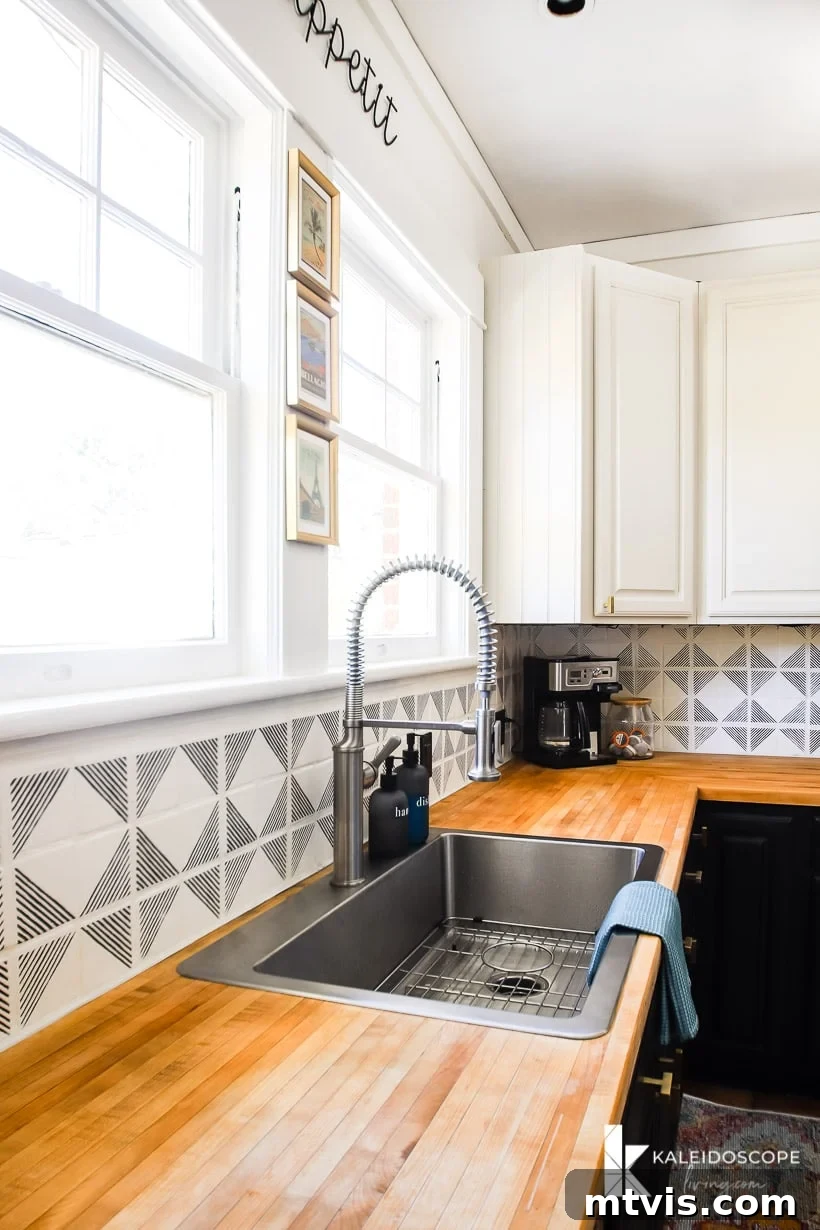
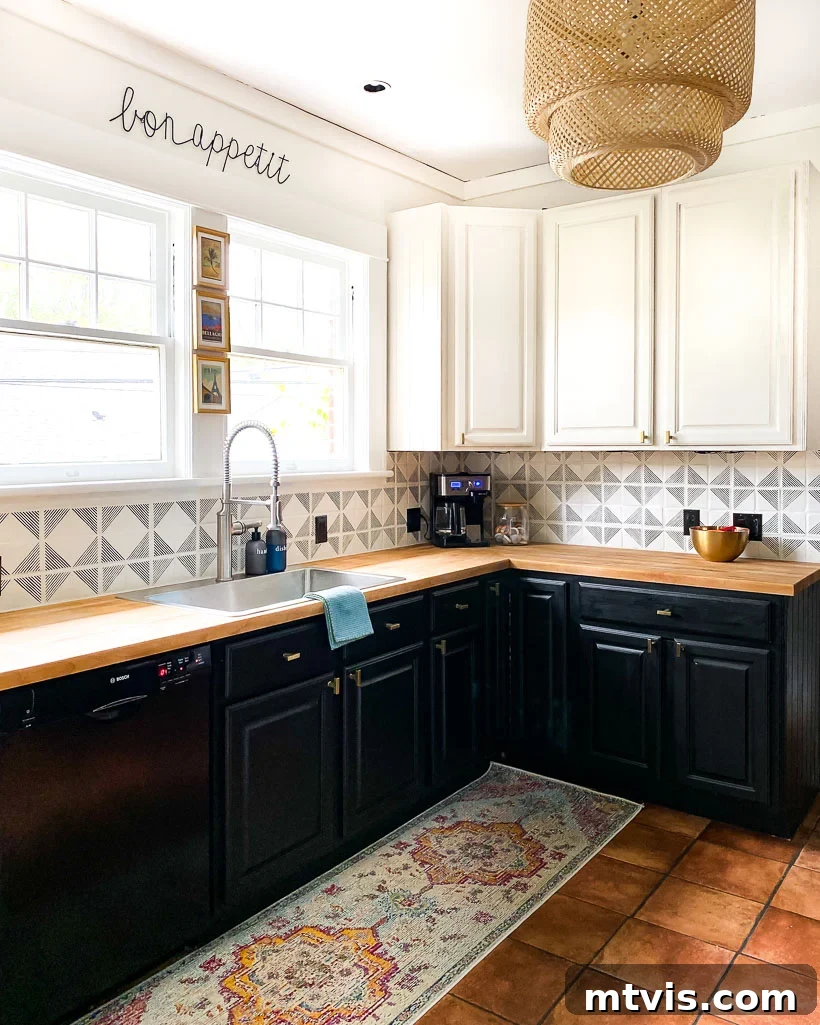
For under $30 (we used less than ⅕ of the bottle of Hemp Oil and only a few sheets of sandpaper) and in less than 2 hours of active work, these once damaged butcher block countertops were restored to top condition, looking absolutely beautiful again! The transformation is truly remarkable and speaks to the power of a simple, effective refinishing process.
Butcher Block Countertops: Frequently Asked Questions & Maintenance Tips
Here are some common questions about butcher block care and maintenance to help you keep your newly refinished countertops looking their best:
Daily cleaning is straightforward. Immediately wipe down your countertops with a damp cloth after each use, especially after spills. Promptly addressing spills prevents stains from setting in. Avoid harsh chemical cleaners, abrasive scrubbers, or excessively wet cloths, as these can strip the oil finish and damage the wood. For routine cleaning every few weeks, use a gentle mixture of mild soap (like dish soap) and warm water. Apply with a soft cloth, wipe the surface clean, and then be sure to thoroughly dry the countertop with a clean towel to prevent water absorption, which can lead to swelling or cracking over time.
For tougher stains or to eliminate odors, a natural remedy works wonders: sprinkle the affected area with coarse table salt and scrub gently with half a lemon. The acidic lemon juice and abrasive salt work together to lift stains and neutralize odors. Rinse the surface lightly with water and dry thoroughly immediately afterward.
Conditioning your butcher block countertop is a crucial maintenance step that safeguards the wood and enhances its natural beauty. Applying a food-grade conditioner helps protect the wood from drying out, which can lead to unsightly cracking, splitting, and warping. It also acts as a barrier against moisture, preventing water from seeping into the wood fibers. Furthermore, conditioning deeply nourishes the wood, bringing out its rich, warm tones and highlighting the intricate grain patterns. You can choose from various food-safe options such as hemp oil, mineral oil, or beeswax, or a blend of these products. While application instructions may vary slightly depending on the specific product, all are generally easy to work with and contribute significantly to the longevity and aesthetic appeal of your butcher block.
The frequency of oiling or conditioning depends on several factors, including how often your countertops are used, how frequently they are cleaned, and the humidity levels in your kitchen. As a general guideline, I recommend conditioning them every 2 to 3 months. This regular application helps maintain optimal conditioning, restores their natural sheen, and reinforces their protective barrier against daily wear and moisture. You’ll notice when your butcher block starts to look dry or dull, or if water no longer beads up on the surface – these are clear signals that it’s time for another application.
Our choice of hemp oil came after some experimentation. Initially, we applied Tung Oil, which is commonly recommended for butcher block. However, it unfortunately did very little to visibly enhance the look of Thea’s countertops. With some Hemp Oil already on hand, and knowing it was completely non-toxic and food-safe, we decided to give it a try. The result was truly transformative! Hemp oil immediately brought out the wood’s rich, warm tones and highlighted its natural grain beautifully. Hemp oil is an excellent wood conditioner because it’s a drying oil, meaning it polymerizes within the wood fibers, penetrating deeply and protecting from the inside out without leaving a surface film that can chip or scratch. We simply rubbed it off with a dry cloth, and it created a perfectly smooth, durable, and naturally radiant finish.
Yes, staining is a viable option if you wish to alter the natural color of your butcher block or conceal any remaining imperfections after sanding. However, it is critically important to use a wood stain that is explicitly labeled as food-safe and non-toxic, especially since it’s a food preparation surface. Water-based stains or natural dyes are generally safer choices. Apply the stain evenly with a brush or a cloth, always moving in the direction of the wood grain. Allow the stain to penetrate for the recommended time (typically 10-15 minutes), then wipe off any excess with a clean, lint-free cloth. Let it dry completely for several hours, or even overnight. If you choose to stain your butcher block, it’s essential to follow up with a food-safe sealer, such as a food-safe polyurethane or a suitable butcher block conditioner, to protect the stain and the wood, and to ensure the surface remains hygienic.
More Kitchen IDEAS
SEE ALL kitchen POSTS
-
Budget-Friendly DIY Backsplash Ideas for Kitchens
-
How Durable are DIY Painted Kitchen Cabinets?
-
How To Refinish Butcher Block Countertops & Maintain Them
-
Designer Tips for Choosing Perfect Kitchen Rug Runners
-
How to Paint Kitchen Cabinets (From a DIYer Who Has Done it 3 Times)
-
Our Kitchen Renovation Reveal- It’s Neutral AND Colorful
There you have it: a complete, detailed guide on how to refinish your butcher block countertops and make them look beautifully new once again! Remember, the keys to this transformation are diligent sanding and consistent conditioning. By carefully following these steps and committing to regular maintenance, your butcher block countertops will not only serve as a stunning focal point in your kitchen but will also endure and bring joy for many years to come.
If you’re eager to learn more about my approach to transforming rooms and spaces throughout our home, I invite you to explore Designer in a Binder®. It’s packed with actionable insights and inspiration to help you create spaces you love.
And for exclusive content, behind-the-scenes sneak peeks, and fresh DIY ideas delivered straight to your inbox, be sure to subscribe before you head out! Don’t miss out on more tips to make your home beautiful and functional.