Embrace Nature: Your Guide to Crafting an Effective DIY All-Natural Bug Spray
Welcome to a healthier, happier, and bug-free outdoor experience! If you’re tired of battling relentless insects and concerned about the chemicals found in conventional bug repellents, you’ve come to the right place. For years, our family has relied on a simple, homemade mosquito repellent that is not only incredibly effective but also entirely natural and safe. This guide will walk you through my favorite recipe, empowering you to create your own DIY bug spray and reclaim your summer evenings.
The Persistent Problem with Pesky Pests
Bugs are an unavoidable part of spending time outdoors, but for some, their bites can be more than just a minor annoyance. My daughter, Avery, and my husband, Joe, unfortunately, attract mosquitoes like magnets. While I understand the appeal (they’re both wonderful people!), the consequences for Avery are particularly severe. She suffers from a condition known as Skeeter Syndrome – a real and often painful allergic reaction to mosquito bites. For Avery, a simple bite can swell dramatically, cause intense itching, and take an agonizingly long time to heal. Although her symptoms have improved with age, preventing bites remains a top priority for our family.
Why Go DEET-Free? A Personal Revelation
My strong desire to protect my family from mosquito bites is matched only by my profound concern about DEET-based bug sprays. My fear of DEET solidified after a truly alarming incident: some spilled on my car door and melted the plastic. Witnessing that corrosive power firsthand made me question what such a chemical could be doing to our skin, our largest organ. It was a stark reminder that while effective, the potential risks associated with DEET were simply too high for my peace of mind, especially when applied repeatedly to children.
This experience ignited a passion for finding safer alternatives. Just as with many other household products, I discovered that creating natural and inexpensive solutions at home is not only possible but often superior. This homemade bug spray offers a fantastic compromise for daily use. While I’ll be upfront and say that for extreme, mosquito-infested environments or areas with high risks of diseases like Zika, some might still consider DEET, this natural formulation serves our family perfectly 95% of the time, offering peace of mind without compromising on efficacy for most outdoor activities.
This post contains some affiliate links for your convenience (which means if you make a purchase after clicking a link I will earn a small commission which helps keep my blog up and running but it won’t cost you a penny more)! Click here to read my full disclosure policy.
Crafting Your Own All-Natural Bug Spray: A Step-by-Step Guide
Making your own bug spray is surprisingly simple and requires minimal ingredients. This recipe is designed to last a full summer season, but you can easily scale down the quantities for smaller batches. Always adjust ingredient volumes proportionally if you’re making a smaller amount.
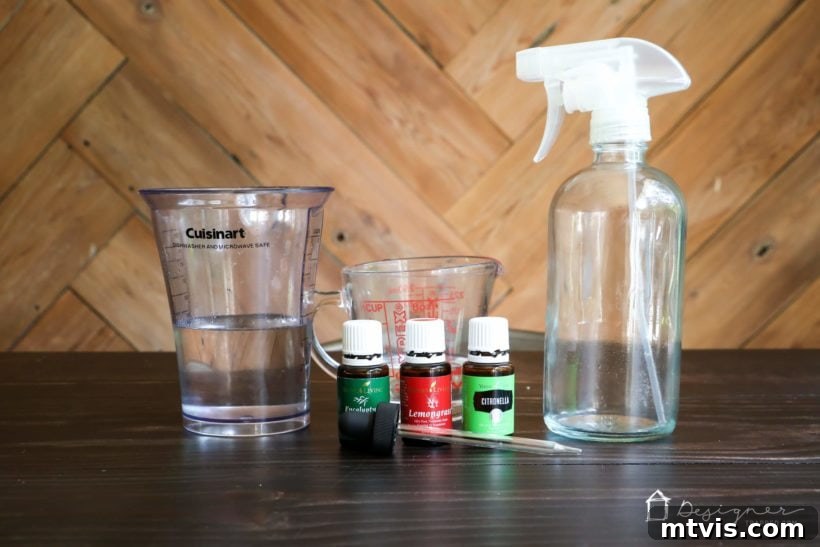
INGREDIENTS & MATERIALS NEEDED
- Essential Oils: Approximately 150 drops total. I recommend a blend of three powerful repellents:
- 50 drops of Citronella essential oil
- 50 drops of Eucalyptus essential oil
- 50 drops of Lemongrass essential oil
(These are highly effective, but feel free to explore other repellent essential oils like lavender, peppermint, or tea tree oil as alternatives or additions.)
- Witch Hazel: 8 ounces of pure witch hazel (an excellent natural emulsifier that helps disperse essential oils evenly in water).
- Water: 2 ounces of distilled or filtered water.
- Glass Spray Bottle: One 16-ounce glass spray bottle. Using glass is crucial when working with essential oils, as they can degrade plastic over time. This is the exact type of glass bottle I prefer.
- Label: A durable label for your bottle. I initially used clear sticker paper, but found that regular sticker paper holds up much better over time. You can learn how I made my labels and even get a FREE template here.
Simple Steps to Your Natural Bug Shield:
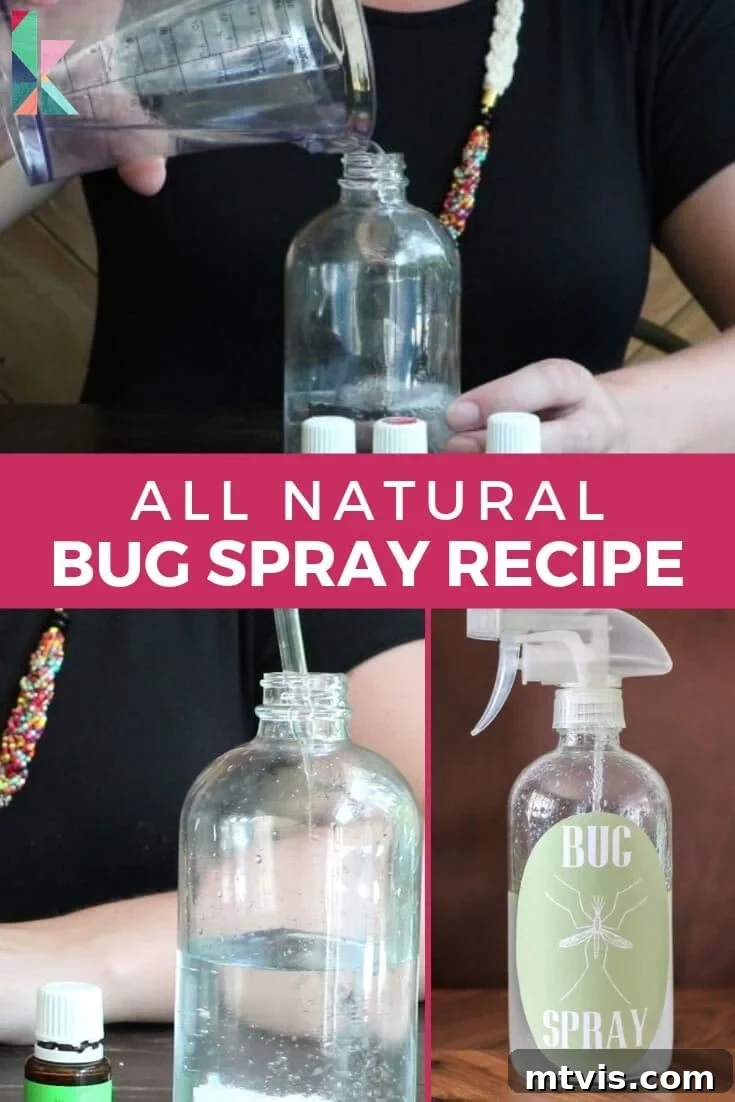
1) Begin by preparing your 16-ounce glass spray bottle. Carefully pour 8 ounces of witch hazel into the bottle. Witch hazel is an unsung hero in this recipe, acting as an emulsifier to ensure your essential oils disperse evenly throughout the water, preventing separation and maximizing effectiveness.
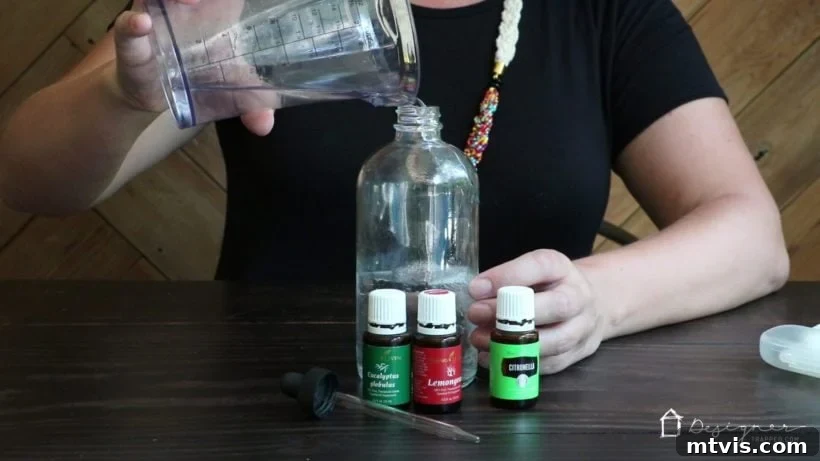
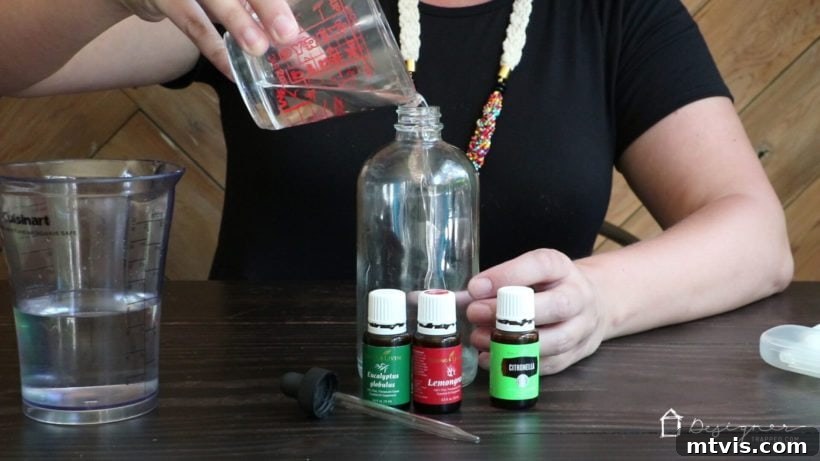
2) Next, add 2 ounces of distilled or filtered water to the bottle. This dilutes the mixture to a safe and effective concentration for topical application, ensuring the essential oils are not too potent for your skin.
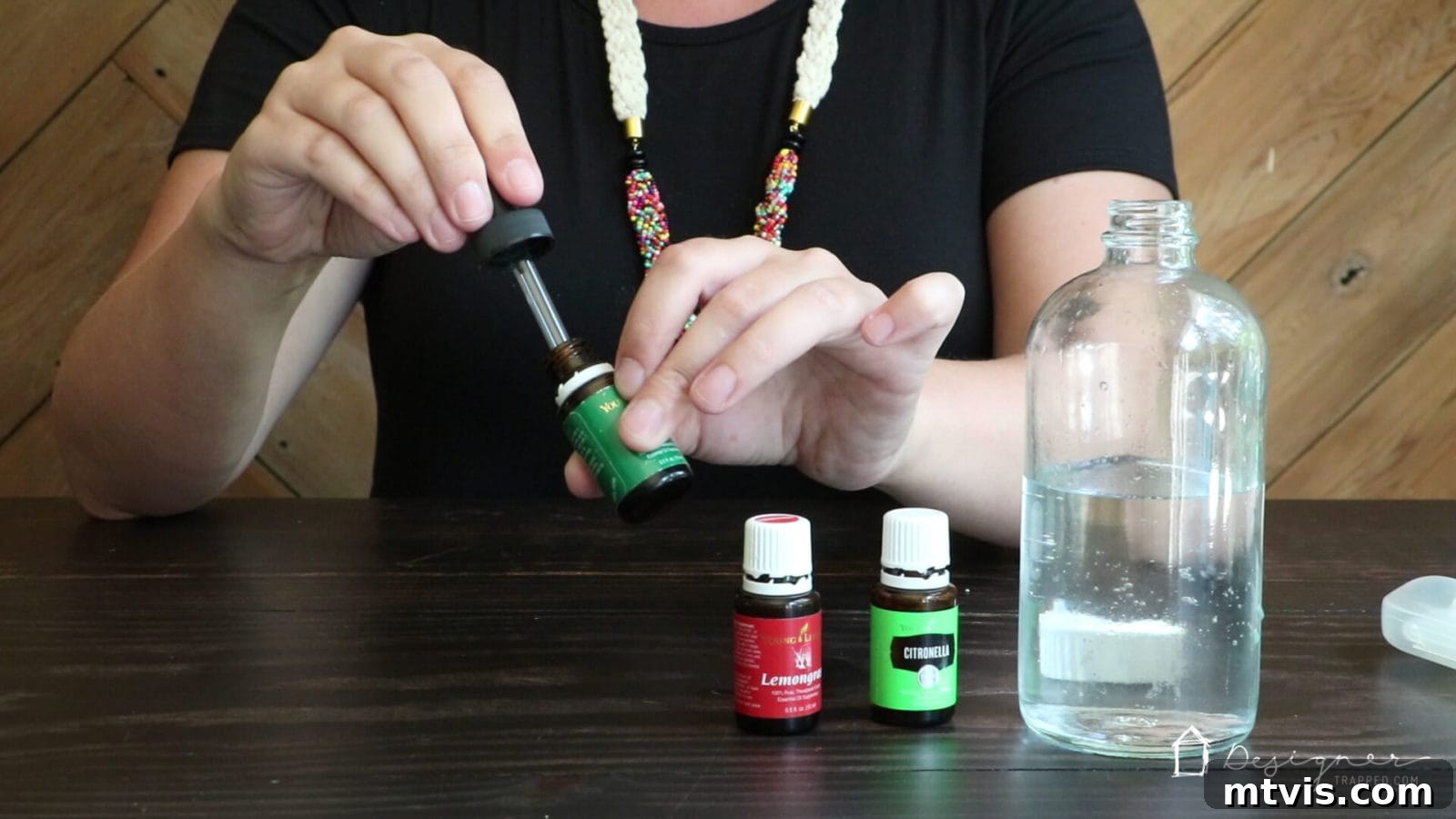
3) Now, for the star ingredients: your essential oils! For a 12-ounce total mixture (8 oz witch hazel + 2 oz water + ~2 oz of space for oils/air), approximately 150 drops of essential oils is ideal. Since I’ve chosen a blend of three, I add about 50 drops of each. The first time I made this, I carefully counted each drop, but now I find that one full dropper of each essential oil approximates 50 drops, making the process even quicker. The synergy of Citronella, Eucalyptus, and Lemongrass provides a robust defense against various biting insects.
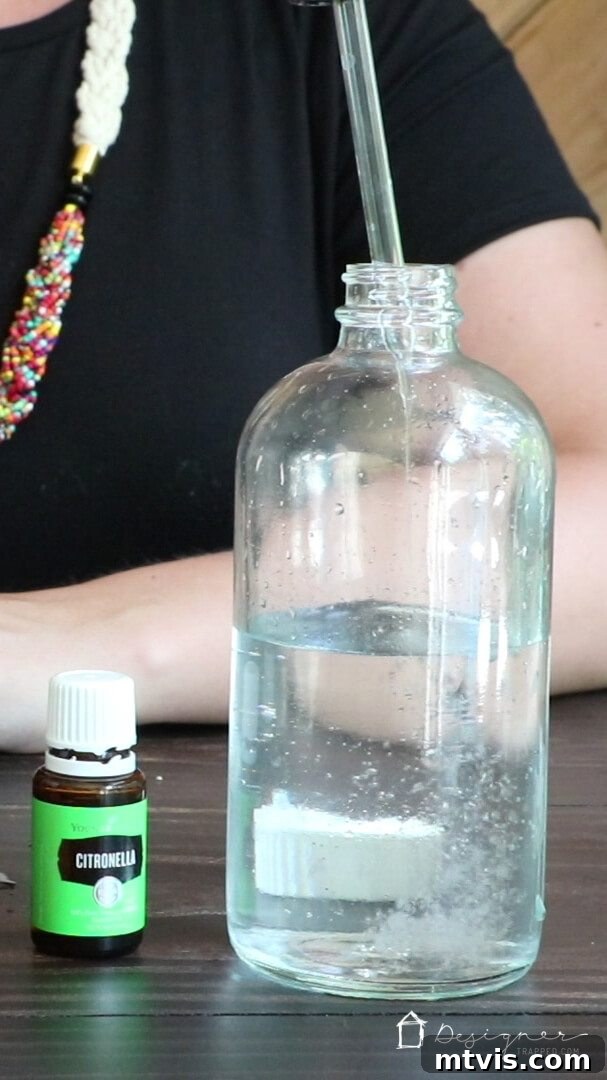
4) Once all ingredients are in the bottle, secure the spray top tightly. Shake the bottle vigorously before each and every use. This ensures that the essential oils, which can naturally separate from water, are thoroughly mixed and evenly distributed for maximum effectiveness upon application.
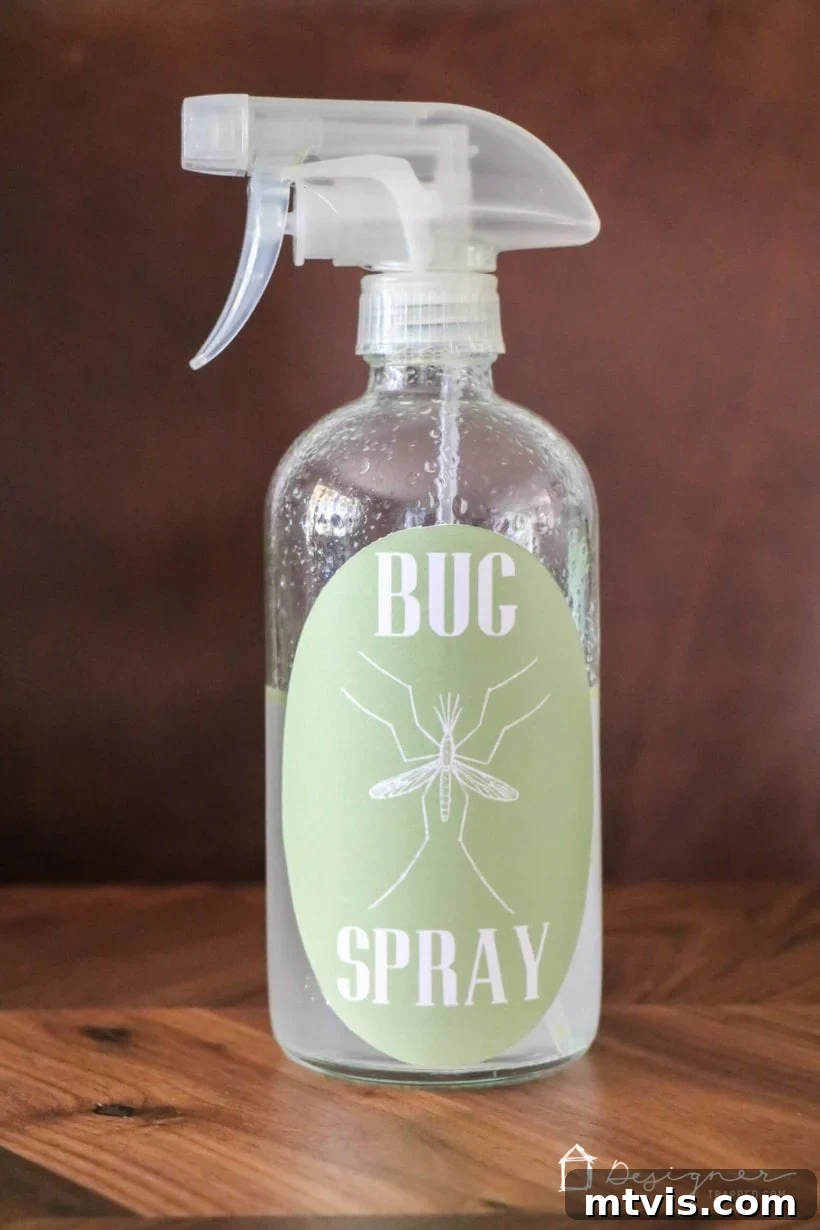
And that’s it! Your powerful, all-natural DIY bug spray is ready. So simple, yet so effective. For a fun, personalized touch, you can find a free bug spray label template to print and attach to your bottle, making your homemade creation look just as professional as it performs.
Understanding the Power of Your Ingredients
Let’s delve a little deeper into why these specific ingredients make such an effective repellent:
- Citronella Essential Oil: A classic and widely recognized natural insect repellent. Citronella works by masking the scents that attract insects, particularly mosquitoes, making it harder for them to find their targets.
- Eucalyptus Essential Oil: Known for its strong, camphoraceous aroma, eucalyptus oil is another potent insect deterrent, especially effective against mosquitoes, ticks, and even some flies. The specific variety, Eucalyptus Globulus, is highly regarded for its repellent properties.
- Lemongrass Essential Oil: With its fresh, lemony, and earthy scent, lemongrass oil is not only pleasant to humans but highly unappealing to mosquitoes and other biting insects. It contains citronellal and geraniol, compounds found in citronella, further enhancing its repellent capabilities.
- Witch Hazel: Beyond its role as an emulsifier, witch hazel is a mild astringent that can be soothing to the skin. It acts as an excellent carrier for the essential oils, allowing them to be applied topically without irritation and aiding in their even distribution.
Cost-Effectiveness of DIY Bug Spray
One of the most appealing aspects of making your own bug spray is the significant cost savings, especially considering the reusability of the spray bottle. Let’s break down the approximate costs for the ingredients (note: these are based on my experience with Young Living oils, which are premium; you can find more affordable essential oils on Amazon for an even lower price point):
- Eucalyptus Globulus (50 drops): Approximately $2.40 (based on 1/6 of a 15mL bottle, which typically contains ~300 drops)
- Lemongrass (50 drops): Approximately $1.87
- Citronella (50 drops): Approximately $3.25
- 8 ounces Witch Hazel: Approximately $5.28
TOTAL COST FOR YOUR 12-OUNCE BATCH: $12.80
COST PER OUNCE: Approximately $0.93
Compare this to popular DEET-based repellents. For instance, a common brand like Deep Woods Off can cost around $1.44 per ounce or more, depending on the product variety and retailer. This means you’re not only making a safer, natural product but also saving money in the long run! You can protect your family from annoying bugs safely and naturally, all while being more budget-conscious.
Tips for Maximizing Effectiveness and Safety
- Patch Test: Before full application, always perform a patch test on a small area of skin to ensure no allergic reactions to the essential oils.
- Reapply Regularly: Natural bug sprays typically require more frequent reapplication than chemical-based ones. Reapply every 1-2 hours, or more often if sweating heavily or after swimming.
- Avoid Eyes and Mouth: Essential oils can be irritating to sensitive areas. Spray on your hands first, then apply to the face, avoiding direct spray near eyes or mouth.
- Children and Pets: While generally safe, consult with a pediatrician or veterinarian before using essential oil-based sprays on infants, very young children, or pets. Always dilute appropriately for children.
- Storage: Store your bug spray in a cool, dark place away from direct sunlight to preserve the efficacy of the essential oils.
- Shake Before Each Use: This is critical! Essential oils can separate, so a good shake ensures even distribution and maximum repellent power.
Embrace a Natural, Bug-Free Lifestyle!
Making your own all-natural bug spray is a small change that can make a huge difference for your family’s health and comfort during outdoor adventures. It’s incredibly satisfying to know exactly what ingredients you’re putting on your skin and that you’re choosing a safer alternative to harsh chemicals. This recipe is not just a bug repellent; it’s an invitation to embrace a more natural, empowered approach to everyday living.
So, why not give it a try? Share this invaluable recipe with your friends and family so they too can enjoy the outdoors safely and naturally, free from both irritating bugs and the concerns of DEET. Pin this guide to Pinterest or share it on Facebook to spread the word!