Are you weary of the endless search for misplaced items – your keys, that important document, or a forgotten accessory? Do you yearn for a life free from clutter, yet feel perpetually trapped by a packed schedule and overwhelming fatigue? Between demanding work and the beautiful chaos of family life, finding time for yourself, let alone decluttering, often seems impossible.
This comprehensive guide offers a realistic pathway to a decluttered home and a more serene lifestyle. Forget drastic overhauls; we’ll show you how to start making tangible progress immediately, even with as little as 10 minutes a day. Transforming your living space into an organized sanctuary is not an overnight miracle, but a journey of consistent, manageable steps. By adopting these practical strategies, you’ll soon experience the profound benefits of a clutter-free environment.
Table of Contents
You have compelling reasons to seek a more organized, less cluttered life. You envision a peaceful environment for your family, where calmness prevails over chaos. You desire patience, free from the exasperation that an excess of belongings often brings. Above all, you wish to cherish your precious time, rather than constantly battling disorganization. Yet, this goal often feels unattainable, especially when you lack vast stretches of time for decluttering.
Rest assured, you are not alone in this struggle. Let’s delve into the fundamental reasons why decluttering is essential for your well-being and uncover effective strategies to achieve it.
This guide is exceptionally thorough, so it’s quite extensive. For a concise reference, consider subscribing to download our exclusive ‘Declutter Your Home Checklist’ – a single-page cheat sheet summarizing all the advice shared here. It’s perfectly designed for printing, offering a quick and convenient reminder for decluttering any area of your home.
Sign up here for your free decluttering checklist!
Before we explore specific steps and practical tips for decluttering your home, it’s crucial to establish a foundational understanding. Without grasping the profound impact of clutter and the ‘why’ behind its removal, your efforts might not yield the lasting results you desire. A deeper awareness will empower you to approach decluttering with greater purpose and effectiveness.
What is Clutter?
Clutter can be defined in various ways, but beyond the simple dictionary definition of “a collection of things lying about in an untidy mass,” a more insightful interpretation emerges: **clutter is anything you own that you neither love nor use.** If an item fails to add genuine value, utility, or joy to your life, it likely contributes to clutter. This broader definition challenges us to look beyond mere tidiness and consider the purpose and emotional connection (or lack thereof) we have with our possessions. For those who find themselves holding onto many items they don’t love or use, exploring strategies to manage accumulative tendencies can be highly beneficial.
What is Decluttering?
Decluttering is the intentional process of identifying and removing those non-essential items from your living space. It’s about consciously shedding possessions that no longer serve a purpose, hold sentimental value, or bring you joy. This act creates physical and mental space, allowing you to prioritize and make room for the things that truly enrich your life and contribute to a peaceful, functional home environment. It’s an ongoing practice of mindful ownership, ensuring that your home reflects your values and supports your desired lifestyle.
Why Clutter is a BIG Problem?
Clutter is far more than just an aesthetic issue; it’s a pervasive problem that impacts various aspects of our lives, from our mental well-being to our financial health and precious time. Understanding these deeper implications can provide the motivation needed to embark on and sustain a decluttering journey.
Clutter is Unsightly
Let’s face it: clutter simply looks bad. As an advocate for beautiful interior design and DIY home projects, I’ve observed countless times that a cluttered room can never truly be beautiful. Many people mistakenly attempt to implement a cohesive design plan for a room without first addressing their accumulated mess. They end up trying to decorate around their clutter, which invariably leads to disappointing results. They might invest time and money in new throw pillows or a vibrant rug, hoping these additions will transform their space, but the underlying clutter continues to drag down the entire aesthetic. A truly inviting and stylish room begins with a clear, uncluttered foundation.
Clutter Affects Your Stress Levels
It’s a scientifically established fact: clutter significantly elevates stress levels. Research from UCLA’s Center of Everyday Lives and Families has identified a direct correlation between the stress hormone cortisol in women and the presence of cluttered homes. Furthermore, a study by the Princeton University Neuroscience Institute revealed that individuals residing in cluttered environments often experience greater exhaustion. Why? Because visual clutter demands more mental energy. It makes it harder to focus, process information efficiently, and complete ordinary daily tasks, leading to increased cognitive load and overall fatigue.
Clutter Hurts Your Wallet
Clutter often translates directly into wasted money. Piles of unopened mail can easily lead to overlooked bills and unnecessary late fees. A disorganized pantry, where items are hidden from view, or an overflowing closet, making it impossible to remember what you own, almost guarantees duplicate purchases. Buying items you already possess is a complete waste of money, and it exacerbates your clutter problem, creating a vicious cycle of spending and accumulation.
Clutter Wastes Your Time
Disorganization and clutter are notorious time thieves. Think about the minutes, or even hours, you’ve spent searching for your phone, car keys, your child’s soccer cleats, or a specific document. How many times have you been late for an important meeting or dinner with friends because you couldn’t find a suitable outfit in your chaotic closet? All this time spent searching, sifting, and tidying could be better utilized for activities you enjoy, contributing to a more relaxed and fulfilling life.
Crucial Tips Before You Start Decluttering Your Home
Before diving into specific room-by-room decluttering tactics, there are several foundational principles that are absolutely vital for your success. Embracing these mindsets and strategies upfront will significantly enhance the effectiveness and sustainability of your decluttering efforts, preventing common pitfalls and fostering a more lasting sense of order.
Don’t Let Emotions Win the Decluttering Battle
Overcoming emotional attachment to possessions is one of the biggest hurdles in decluttering. The sentiments are familiar: “This was a gift, I can’t be ungrateful,” “I love this coat and it might fit me again someday,” or “I can’t get rid of this, it was so expensive!” These emotional arguments are powerful, but to achieve a truly decluttered home, you must learn to conquer them. Take a deliberate moment to resolve that you will not allow emotions to prevent you from parting with items that no longer serve you or bring genuine joy. Remember, true gratitude isn’t about keeping an unwanted item; it’s about appreciating the giver or the memory. Let go of aspirational items that don’t fit your current reality. And the money spent is already gone – keeping an item you don’t use doesn’t bring that money back, it only continues to cost you space and peace of mind.
Don’t Wait Until You “Have Time”
This might seem counterintuitive, as many organization guides suggest scheduling large blocks of time for decluttering. However, my approach differs: do NOT wait until you “have time.” Here’s why: decluttering is not a one-time event with a clear beginning, middle, and end; it’s an ongoing process. To maintain a truly decluttered home, regular, smaller efforts are far more effective than infrequent, exhaustive sessions. Instead of waiting for an elusive “free weekend,” just start. Dedicate just 10 minutes if that’s all you have. Your primary goal isn’t to finish an entire room, but to make consistent progress. If you aim for “done,” you’ll likely feel overwhelmed and postpone the task indefinitely, believing you need days or weeks to declutter your entire home. That perspective is a barrier to progress. Embrace the idea that decluttering happens in bursts. It’s perfectly normal, and highly effective, to spend weeks decluttering a single area, such as your entryway, through short, focused 10-minute sessions. The key is consistency over intensity. While embracing short bursts, it is beneficial to stick to one specific area until it’s complete. Bouncing between rooms can dilute your efforts and diminish your motivation, making it harder to see significant, satisfying results.
Start With a Highly Visible Area
This brilliant tip comes from Dana K. White of A Slob Comes Clean. Her insights, particularly from her book, “Decluttering for the Rest of Us,” illuminated a crucial “aha moment” for me. Dana wisely advises, “I learned the hard way that decluttering momentum is best achieved by following the Visibility Rule. Tackling a rarely used drawer in the garage feels so right, but it’s wrong… Start decluttering in the most visible area. I recommend starting at your front door, or whichever door guests enter.”
“I learned the hard way that decluttering momentum is best achieved by following the Visibility Rule. Tackling a rarely used drawer in the garage feels so right, but it’s wrong… Start decluttering in the most visible area. I recommend starting at your front door, or whichever door guests enter.”
– Dana K. White, Decluttering for the Rest of Us
While it seems obvious once you hear it, many of us are tempted to begin with an unseen, overwhelming space like a packed attic or a rarely opened closet. Resist that urge! Starting with highly visible areas – such as your entryway, kitchen counter, or living room – allows you to immediately see and appreciate the impact of your efforts. This visible progress provides vital motivation and reinforces your commitment to the decluttering process, making it easier to tackle less visible, larger projects later on.
The Ground Rules for Decluttering
Before you begin physically sorting items, establish clear rules for what stays and what goes. Without these predefined criteria, you risk emotional paralysis and losing the battle against clutter. Here are the fundamental rules I rigorously apply when decluttering any space:
- Every Item Must Have a Designated Home: If an item doesn’t have a permanent, specific place to belong, it does not stay. A temporary pile on your kitchen counter or dining room table is not a home. This rule forces intentionality; if you can’t envision where an item lives in your organized space, it’s likely something you don’t truly need to keep.
- Purpose or Love: An item must either serve a current, active purpose or be something you genuinely love. Release items you keep merely out of obligation (it was a gift), potential future need (“I might need it someday”), or ambivalence (you feel “meh” about it). Holding onto excess items creates mental and physical burden, demanding more work from you. Letting go creates space for items that are truly useful, beautiful, and contribute positively to your life.
- Swift Removal: Once you decide to part with an item, get it out of your house as quickly as possible. Placing donations in a box that sits in your garage for six months means you haven’t truly decluttered; you’ve merely relocated the clutter. Plan routine trips to your preferred charity donation center. For items designated for sale, set a strict deadline. If they haven’t sold by that date, commit to donating or discarding them. This prevents the “to sell” pile from becoming new clutter.
Decide How to Handle Your Paper Problem
Does it often feel like you’re drowning in paper? Many people experience this overwhelming influx of mail, school papers, receipts, and important documents. The sheer volume can quickly transform tidy surfaces into chaotic piles. Several years ago, my husband and I made a conscious effort to transition towards a paperless lifestyle, and it has been an absolute game-changer. While we aren’t entirely paper-free, we are no longer overwhelmed by incoming paper, and the days of random stacks are long gone.
Going paperless might sound daunting, but it’s not inherently difficult. It often involves learning new tools and workflows to manage digital documents quickly and efficiently, which was certainly true for me. This shift is incredibly empowering once you establish a system.
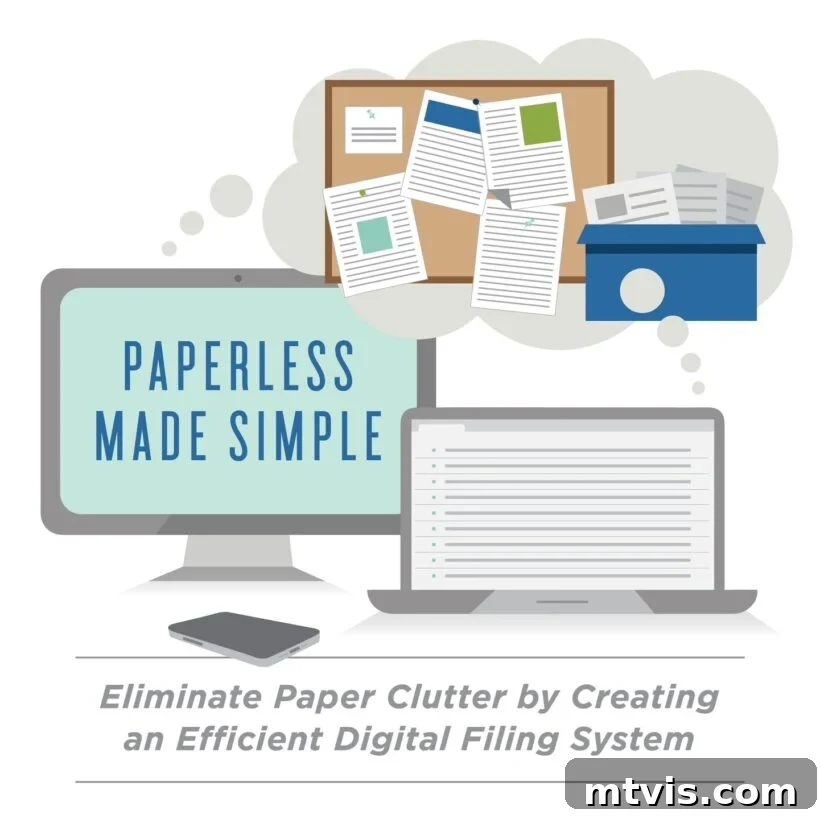
For those serious about tackling paper clutter, I highly recommend exploring resources that provide practical, step-by-step guidance. Courses like “Paperless Made Simple” by Donnie and Abby Lawson, who have maintained a paperless home for over a decade using simple tools like Evernote, offer invaluable insights. Such resources teach the essential theory, technical details, and practical workflows for creating and utilizing your digital filing cabinet. Integrating a streamlined paperless workflow into your daily routine can eliminate paper clutter without consuming significant extra time. Once the system becomes second nature, managing documents digitally will be effortless.
The Basic Steps for Decluttering Any Space In Your Home
No matter which room or area of your home you decide to tackle, a consistent set of basic steps will guide your decluttering process. Adhering to these fundamental actions ensures efficiency and prevents overwhelming feelings, allowing you to make steady, visible progress across your entire home.
Initial Sweep and Paper Management
Before you dive deep into sorting, these two preliminary steps will significantly streamline the process for any room:
- Quick Sweep for Out-of-Place Items: Conduct a rapid scan of the room to identify and remove any items that clearly belong elsewhere. Use a designated basket or bin to collect these displaced articles. The goal here is speed and efficiency – avoid making complex decisions. Simply return your children’s clothes to their bedrooms, books to their shelves, or tools to the garage. This initial pass clears superficial clutter and gives you a clearer canvas to work with.
- Gather and Centralize All Paper: Collect every piece of paper in the room and consolidate it with other paper that needs processing. This step is critical, as paper clutter can quickly accumulate and obscure other items. If you’ve committed to going paperless, this is where your new system comes into play, allowing you to deal with it systematically and prevent future paper piles from forming.
Once these two quick “first steps” are completed, your space will already feel lighter, and you’ll be primed to begin the more intensive sorting process.
Create a Sorting System
To avoid creating a bigger mess during the decluttering process, establishing a clear sorting system is essential. I highly recommend a modified version of the popular “Three-Box Method,” which I call the “Three-Box + a Trash Bag Method.” All you need are three cardboard boxes and a sturdy trash bag. Label the boxes “Keep,” “Donate,” and “Sell.”
- Keep Box: For items that meet your “Ground Rules” – they have a home, serve a purpose, or bring you joy.
- Donate Box: For items in good condition that you no longer need but someone else could benefit from.
- Sell Box: For valuable items that you believe could recoup some money. (Keep in mind the realistic selling considerations we’ll discuss shortly).
- Trash Bag: This is for items that are truly garbage, broken beyond repair, expired, or otherwise unusable.
While you could combine “Donate” and “Sell,” separating them is advisable. Donate items should leave your home quickly, whereas items designated for sale might require more time to market and sell, preventing immediate clutter removal. This structured approach helps you make swift decisions and keeps your workspace organized as you progress.
Dispose of Broken, Expired, or Incomplete Items
This step might seem obvious, yet many people hesitate when it comes to throwing things away. If an item is broken, missing pieces, or clearly beyond repair, place it directly into your trash bag without a second thought. Resist the urge to rationalize that it “might be fixed someday” or “the missing piece will turn up.” Make peace with its uselessness and let it go. The same principle applies to anything with an expiration date that has passed, especially food, medications, or cosmetics. These items offer no value and simply take up valuable space. This simple, no-negotiation rule is one of the easiest ways to lighten your load quickly.
Decide Whether to Keep, Sell, or Donate What’s Left
Once you’ve eliminated the obvious trash, it’s time to move through your remaining items and make clear decisions using the ground rules established earlier. Here’s a quick recap to guide your choices:
- Keep: An item earns a place in your home only if it has a **permanent, designated home**, serves a **current, active purpose**, or is something you **absolutely love** and brings you genuine joy. Be honest with yourself about its true value to your life right now.
- Donate: If an item is in good, usable condition but doesn’t meet your “keep” criteria, it should be donated. The critical part here is to act quickly. Once an item is earmarked for donation, ensure it leaves your house promptly to a local charity or donation center.
- Sell: For items with potential monetary value that you no longer need, selling can be an option. However, this category requires an important caveat: set a strict deadline for selling. If the item hasn’t sold by that date, pivot to donating it or, if truly unusable, throwing it away. This prevents your “for sale” pile from becoming persistent clutter.
Making these decisions decisively, rather than deferring them, is key to successful decluttering. Each choice brings you closer to a more intentional and organized home.
Be Realistic About Selling Items
When you encounter an item you suspect “is worth something” and consider selling it, pause and engage in some brutally honest self-reflection. Ask yourself these two crucial questions before adding it to your “sell” pile:
1) Is there a market for the item?
The perceived value of an item you once purchased holds little weight if there’s no current demand for it. For instance, we once had a large, expensive rear projector TV. While it was top-of-the-line when bought, flat-screen TVs have become so affordable and common that there was simply no market for its resale. In fact, many charity organizations won’t even accept old TVs anymore. Its original cost or quality becomes irrelevant if no one is willing to buy it now. Conversely, we successfully sold a large Pottery Barn sectional sofa in excellent condition for nearly $900 after 10 years because a strong market for quality used furniture existed. If you’re unsure about market demand, browse platforms like Craigslist, eBay, or local Facebook Marketplace groups to gauge how similar items are currently selling.
2) Is it worth my time to sell it?
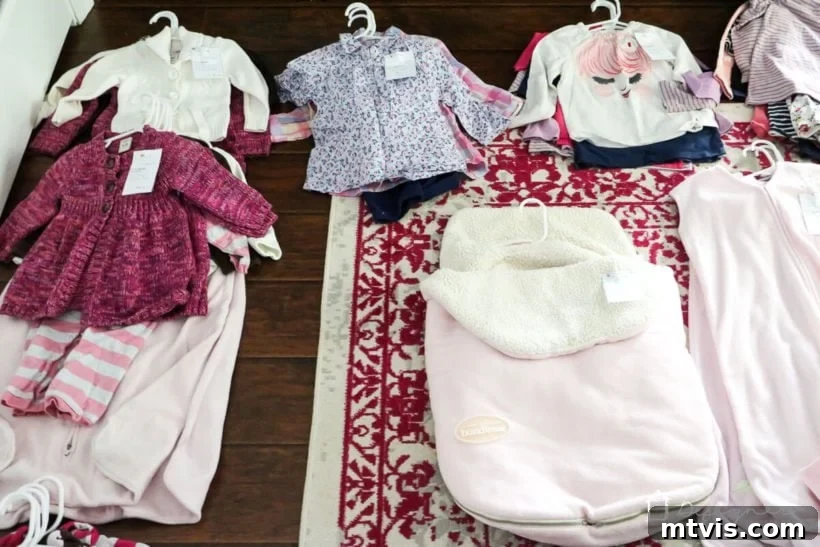
Selling an item involves more than just listing it. It requires taking photos, writing descriptions, responding to inquiries, negotiating prices, and arranging pickup or shipping. This process can be time-consuming. Therefore, it’s generally not worth your valuable time to sell items for just $5 or $10. The only exception might be tagging multiple clothing items for a consignment sale; while each piece might only fetch a small amount, the cumulative profit from many items can make the effort worthwhile if you choose the right sales events.
If the answer to one or both of these questions is “no,” then you are almost certainly better off donating the item. While it can be tough to feel like you’re losing money, the peace of mind gained by getting it out of your home is invaluable. Plus, the knowledge that your item will benefit someone else in need can be incredibly rewarding.
How to Declutter Your Home Room-by-Room
Now that you’re equipped with the fundamental steps for decluttering any space, you can confidently begin your journey. While the basic principles apply universally, certain areas of your home present unique challenges and benefit from more specific guidance. Rather than attempting an exhaustive, book-length analysis of every single room, we’ll focus on the areas where people most commonly struggle with persistent clutter, providing targeted tips to help you reclaim these vital spaces.
Decluttering Your Kitchen
The kitchen, often considered the heart of the home, is where an incredible variety of activities converge: cooking, homework, family meals, conversations, and the constant flow of daily life. This high-traffic, multi-functional nature makes it one of the most challenging rooms to keep tidy and organized, particularly when it comes to countertops and storage. Maintaining a functional and clean kitchen is paramount for reducing stress and enhancing daily enjoyment.
Kitchen Countertops
Kitchen countertops, being among the largest flat surfaces in most homes, often become unintended landing zones for an array of items. Books, mail, school papers, magazines, small appliances, and groceries tend to accumulate here. However, cluttered countertops severely hinder the kitchen’s functionality and aesthetic appeal. A clear counter space allows for efficient meal preparation, makes cleaning easier, and significantly reduces visual noise. Personally, I love my marble-look painted countertops and prefer not to obscure them!
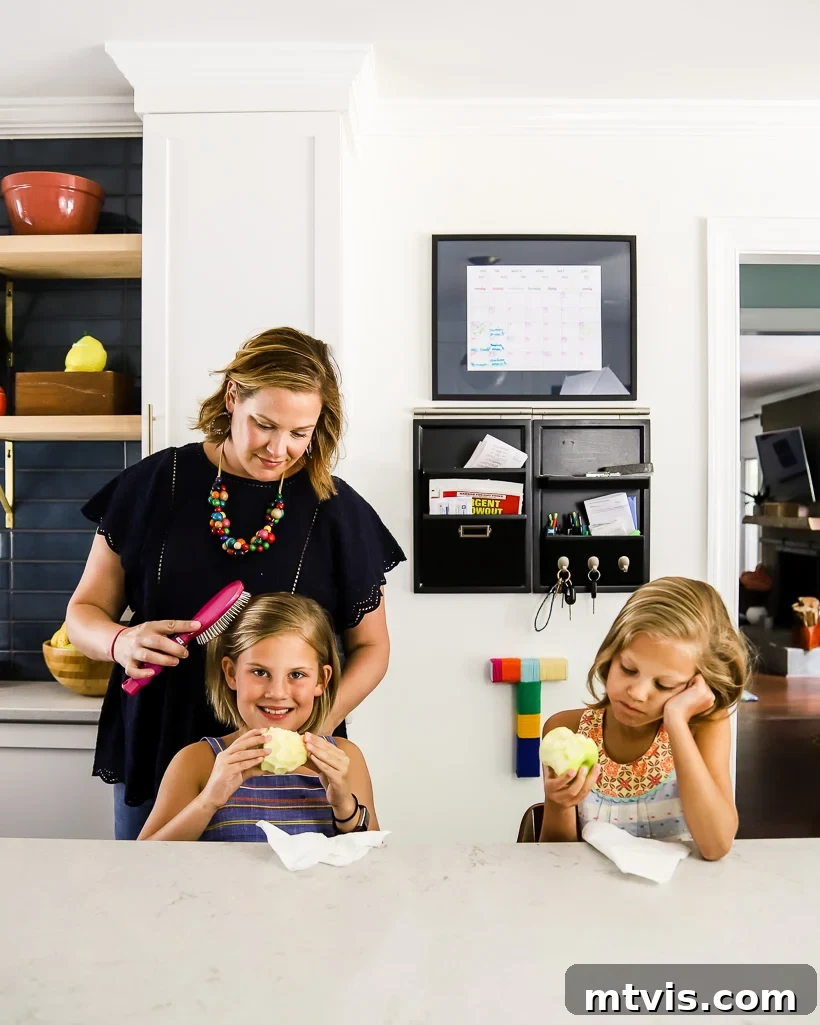
The key to maintaining clear kitchen counters is to establish and rigorously enforce a strict “no-clutter” policy. Implementing a family command center and working towards a paperless system will dramatically simplify this. For more insights on managing daily influx, explore Why Your Busy Family Needs a Command Center.
- Clear All Paper: While mentioned in general steps, this bears repeating for the kitchen. Piles of mail, school notices, and flyers are notorious countertop inhabitants. Address them immediately, ideally through your paperless system, to prevent accumulation.
- Only Keep Absolute Necessities Out: Limit countertop items to only those used daily. For many, this includes a coffee maker, toaster, maybe a kettle. Consider essentials like olive oil, salt, pepper near the stove, and dish soap by the sink. If you can pare it down further, do so. A pristine, clutter-free kitchen profoundly reduces stress and transforms meal prep into a more enjoyable activity. It also simplifies grocery unpacking immensely.
- Creative Solutions for Tiny Kitchens: If your kitchen is small with limited cabinet space, the temptation to keep items on counters is strong. I understand this struggle, having lived in many homes with compact kitchens. This situation demands difficult choices but also encourages creative solutions. Explore clever DIY storage solutions for small spaces and specific genius storage ideas for small kitchens to maximize every available inch, often by utilizing vertical space or smart drawer dividers.
Kitchen Cabinets & Drawers
Kitchen cabinets and drawers represent prime real estate in your home, and their efficient use is fundamental to a well-functioning kitchen. When we moved into our current home, we not only undertook a budget-friendly kitchen makeover, but we also dedicated significant time and effort to decluttering and optimizing these storage areas. Crammed, disorganized cabinets and drawers are a major source of frustration.
Given the depth of strategies for kitchen cabinet and drawer organization, I cannot cover every detail here. For comprehensive guidance, I highly recommend exploring my detailed posts on how to organize kitchen cabinets and a collection of inspiring kitchen cabinet organization ideas. However, here are some essential tips to help you maximize your kitchen storage:
- Eliminate Duplicate Utensils: You likely don’t need two vegetable peelers, five spatulas, or three hand whisks. Identify and remove unnecessary duplicates to free up valuable drawer space for tools you use daily.
- Reduce Pots and Pans: Most households own more pots and pans than they regularly use. These items consume a significant amount of cabinet space. Keep only those essential pieces that serve your actual cooking needs.
- The 12-Month Rule: If you cannot recall using an item in the past 12 months, it’s a strong indicator that you don’t truly need it. Be brave and let it go. This applies to specialty gadgets, rarely used bakeware, and obscure utensils.
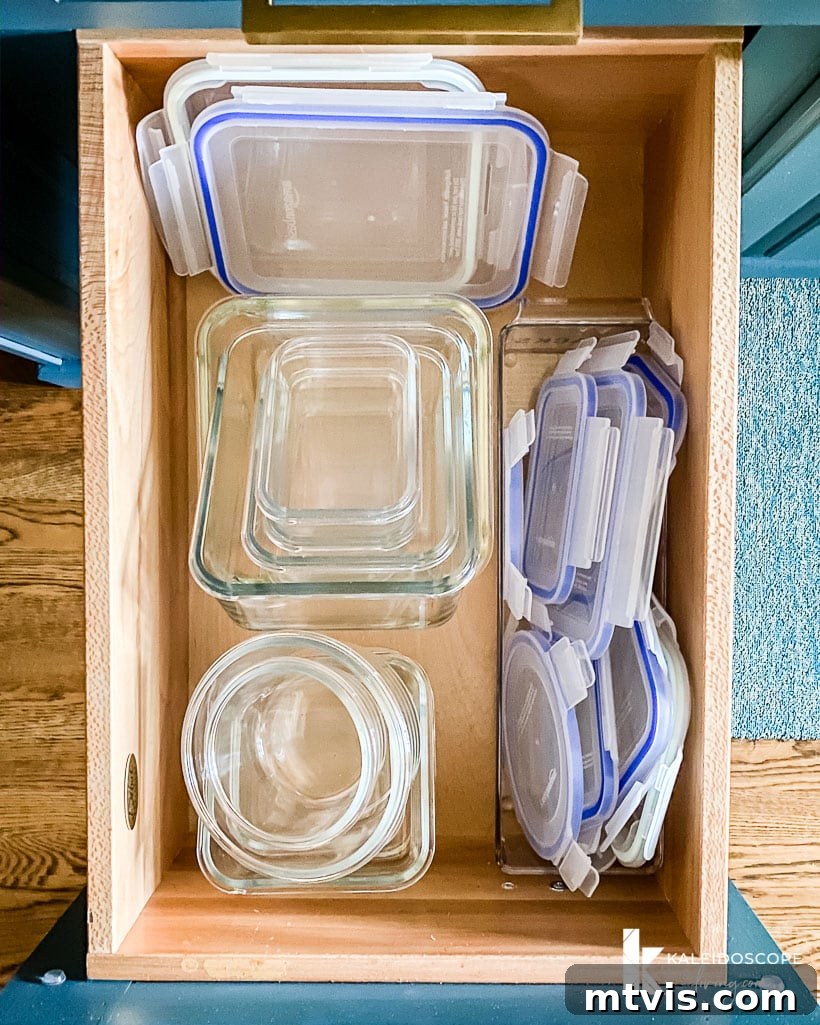
- Evaluate Food Storage Containers: Many people accumulate an excessive number of food storage containers. Keep only a practical set that meets your needs, and ruthlessly discard any container that is missing its lid – they are simply taking up space.
- Relocate Rarely Used Items: Holiday dishes, large serving platters, or seasonal entertaining pieces don’t need to occupy valuable kitchen cabinet space year-round. Move these items to alternative storage locations, such as a pantry, a console table in another room, or even under a bed in dish storage bags.
- Prioritize Accessibility: Ensure that items you use every single day are the easiest to reach. Store them at the front of cabinets, on lower shelves, or in readily accessible drawers. Less frequently used items can be stored higher up or towards the back.
- Group Like Items: Implement a system where similar items are stored together. Keep all baking supplies in one area, all pots and pans together, and all food storage items consolidated. This logical grouping makes it easier to find what you need and return items to their proper place.
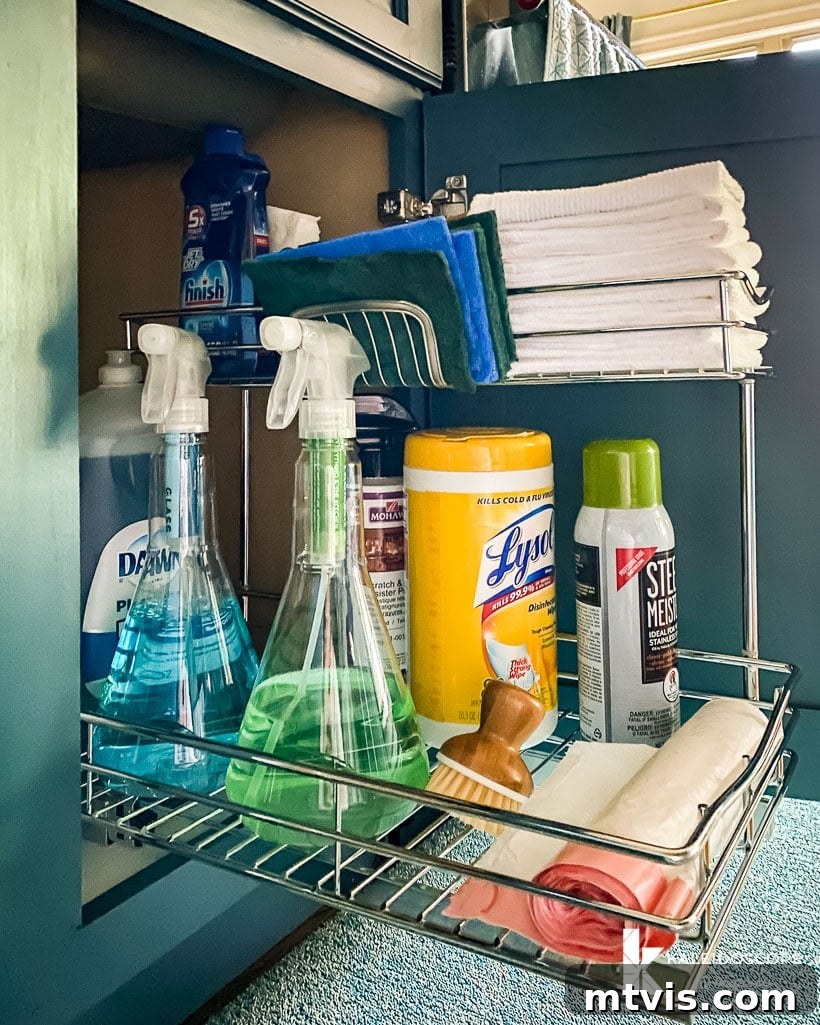
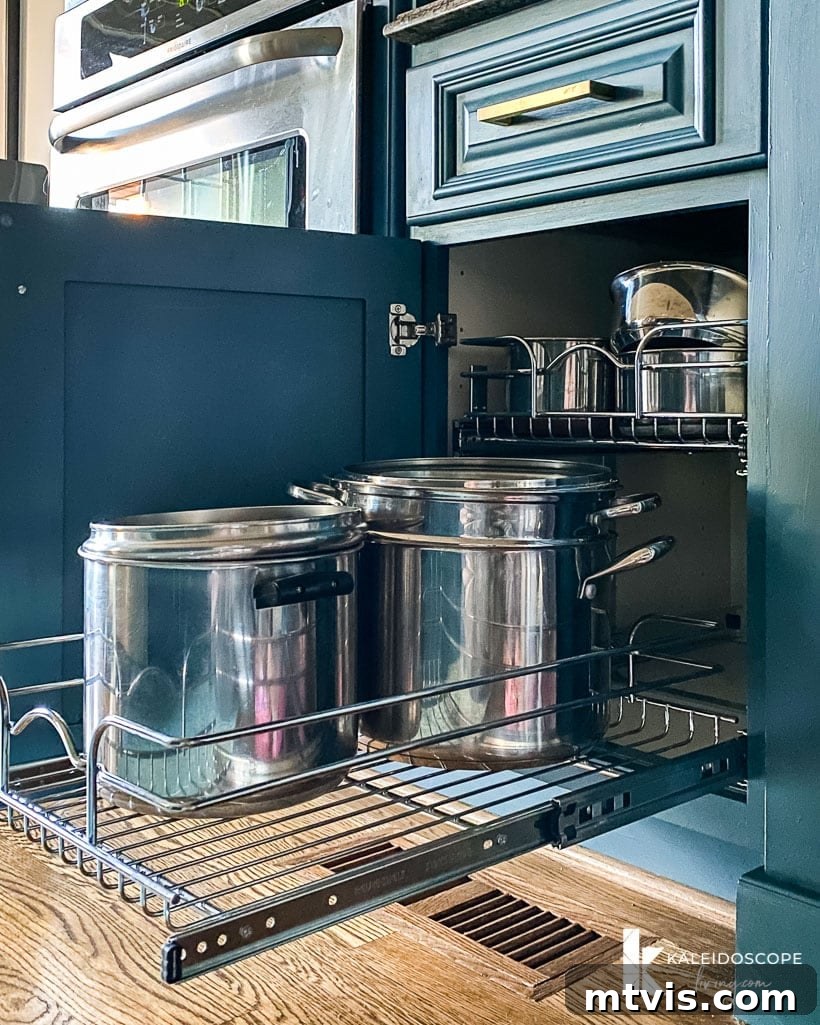
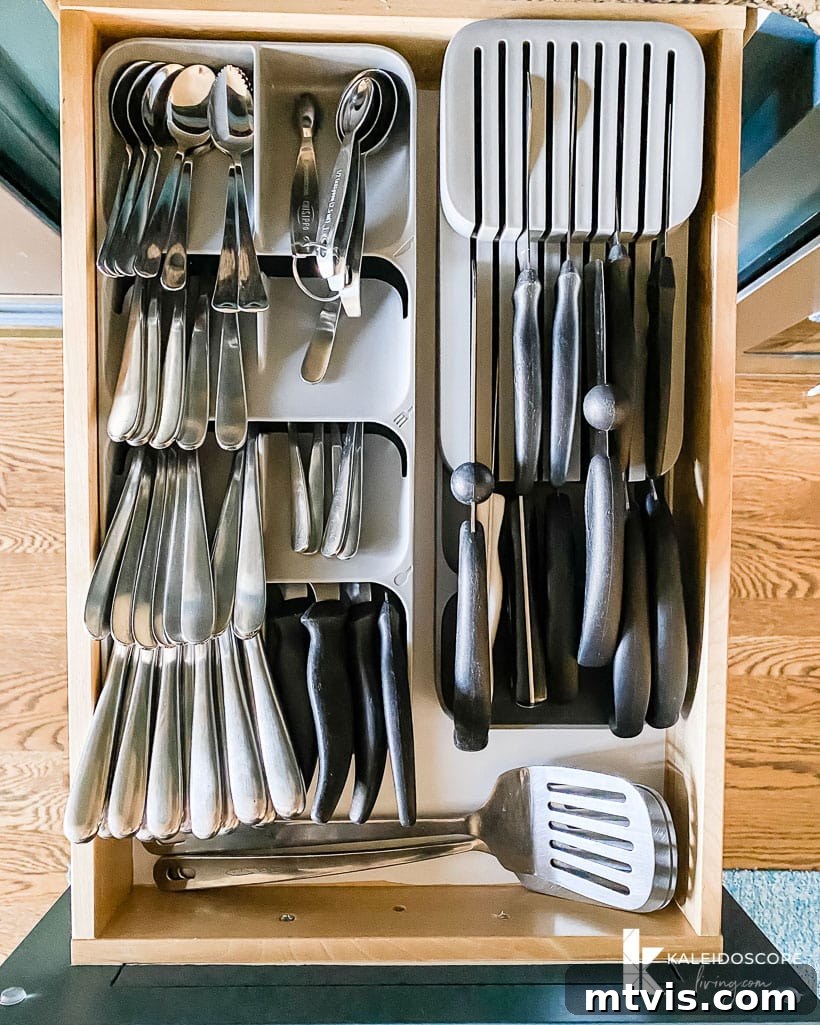
These principles are evident in our own kitchen, where thoughtful organization has transformed our daily routine. Below, you can explore some of the products we integrated to enhance the functionality of our cabinets and drawers.
Scroll and click on any image below for full product details
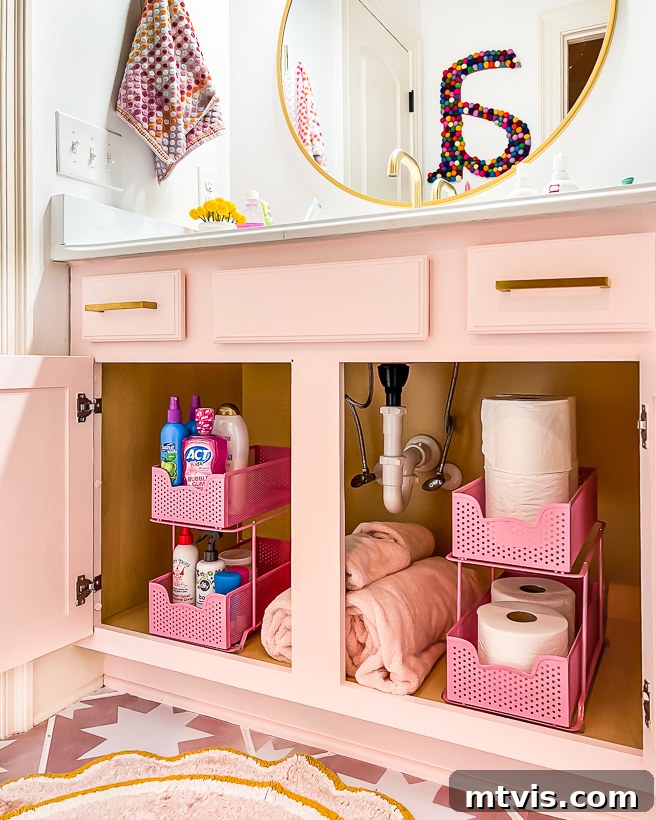
Decluttering Your Bathroom(s)
Aside from the kitchen, bathrooms are arguably the most common rooms in a house (excluding attics and garages) to accumulate a surprising amount of clutter. The sheer volume of cosmetics, shampoos, makeup, dental samples, travel-sized bottles, and various personal care products can quickly lead to a giant mess. The good news? Bathrooms are also often one of the quickest and easiest rooms to declutter, offering rapid and satisfying results.
- Discard Old and Unused Towels: Towels and washcloths surprisingly consume a significant amount of storage space. Many people hold onto a surplus of old towels they never use. If they’re beyond use, trash them. If you intend to repurpose them as cleaning rags, fine – but move them out of the bathroom to a designated cleaning supply area where they will actually be used for that purpose.
- Clear All Flat Surfaces: Remove as many items from your bathroom counter as possible. The goal is to keep only absolute daily necessities out. After decluttering your drawers and cabinets, you should discover ample space to store most of what currently sits on your counters, creating a much cleaner and more functional vanity area.
- Systematic Sorting of Drawers and Cabinets: Arm yourself with trash bags, as you’re likely to discard a substantial amount of expired or unused products. Go through each drawer, medicine cabinet, and under-sink cabinet one at a time, following these specific guidelines:
- If You Hate It, Toss It: Have you ever bought a shampoo or a lotion that you disliked but then stashed it away? Now is the time to get rid of it. If you wouldn’t use it, don’t keep it. Consider donating unopened, unused items to a local shelter if appropriate.
- Check Expiration Dates: This is non-negotiable. All medications (prescription and over-the-counter), toiletries, and many cosmetics have expiration dates. Scrutinize these dates. If an item has expired, it goes into the trash immediately. Expired products can lose efficacy or even become harmful.
- Makeup Expiration Guidelines: Makeup can harbor bacteria, making it crucial to know when to discard it, especially if there’s no visible expiration date:
- Eye Makeup (mascara, eyeliner, eyeshadows): Generally, toss after 3 to 4 months. The sensitive mucous membranes around the eyes are prone to irritation and infection from bacteria-laden products.
- Foundations and Liquid Concealers: Discard 6-12 months after opening.
- Stick Concealers: Can last up to 2 years before needing replacement.
- Powder-Based Products (powders, bronzers, blush): Typically kept for up to 2 years. (Note: Powder eyeshadows are an exception and should follow the 3-4 month rule for eye makeup).
- Lip Gloss: Toss after 6 months.
- Lipstick: Can be kept for up to a year.

Decluttering Your Living Room
If the kitchen serves as the heart of the home, the living room undoubtedly embodies its soul. It’s the central gathering space where families relax, watch TV, children play, parents work, and even occasionally share meals (don’t tell my kids!). Yet, with so many functions, this room easily becomes a cluttered hodgepodge of misplaced items and toys, making true relaxation difficult. These tips will help you create an organized living room that invites comfort and enjoyment.
- Remove Oversized or Obstructive Items: Begin by identifying anything that is simply too large for the room’s proportions or constantly gets in the way of movement and function. Furniture that cramps the space or decor that impedes flow should be removed or relocated.
- Tame Electrical Cords and Cables: While cords are technically functional, their visual chaos creates instant clutter. Take the time to manage and conceal them. Even the most beautifully decorated and organized rooms can be visually compromised by untamed cords. In our family room, I use a stylish basket to hide our router and other electronic devices, making a significant difference to the room’s aesthetic. You can spot it subtly tucked behind our floor lamp – concealing a multitude of wires!
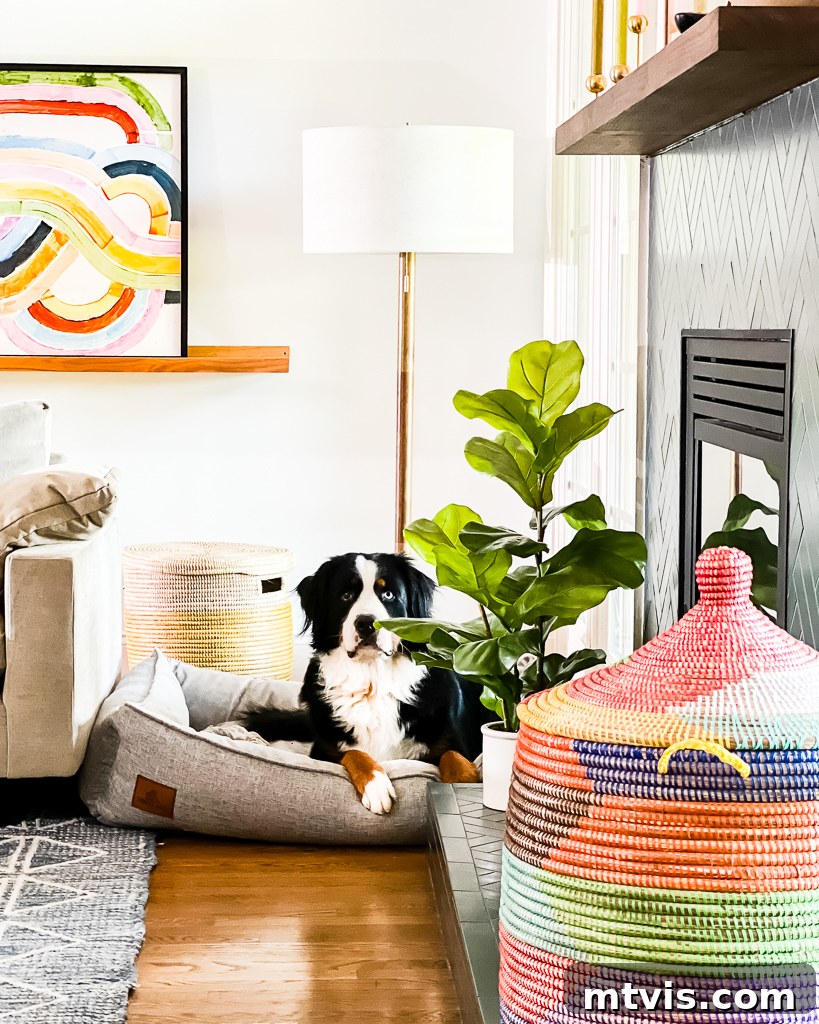
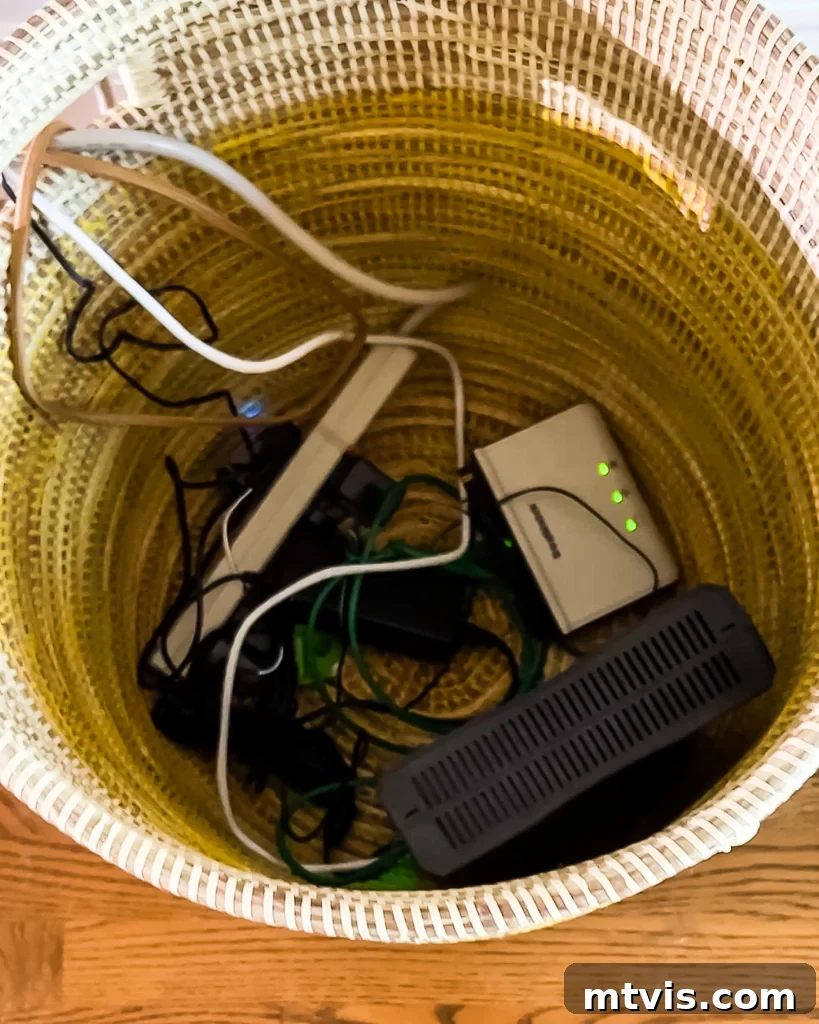
Below are some excellent options for effective cord management solutions.
Scroll and click on any image below for full product details
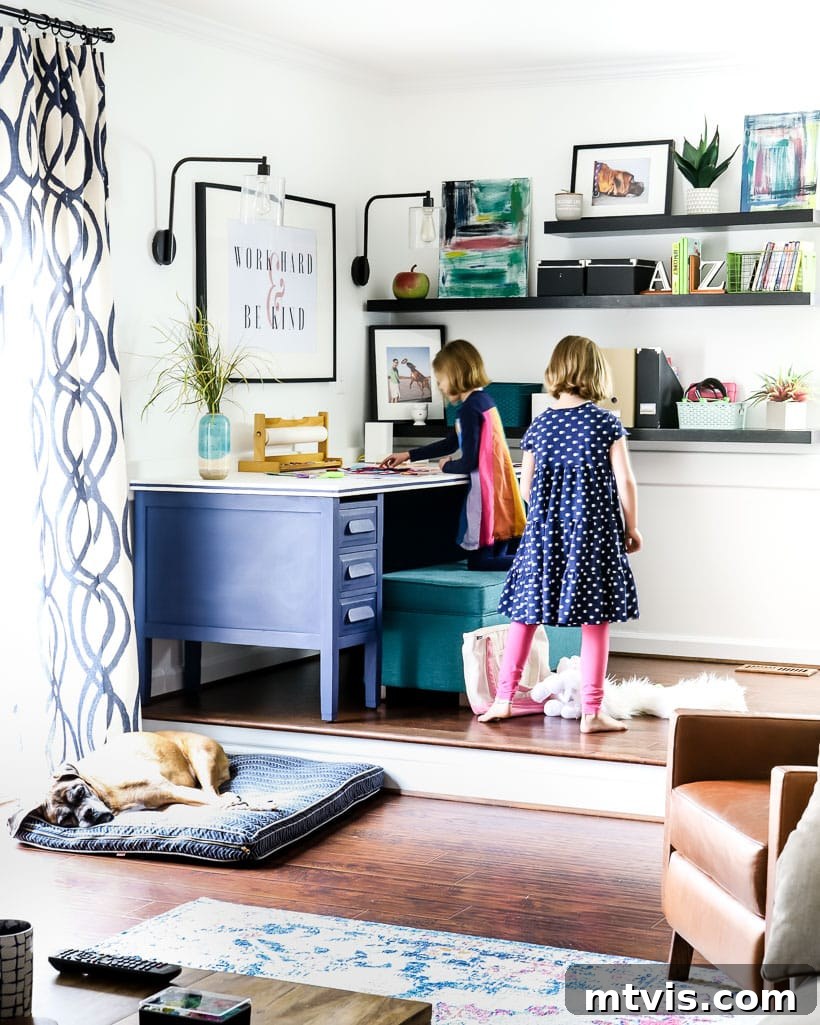
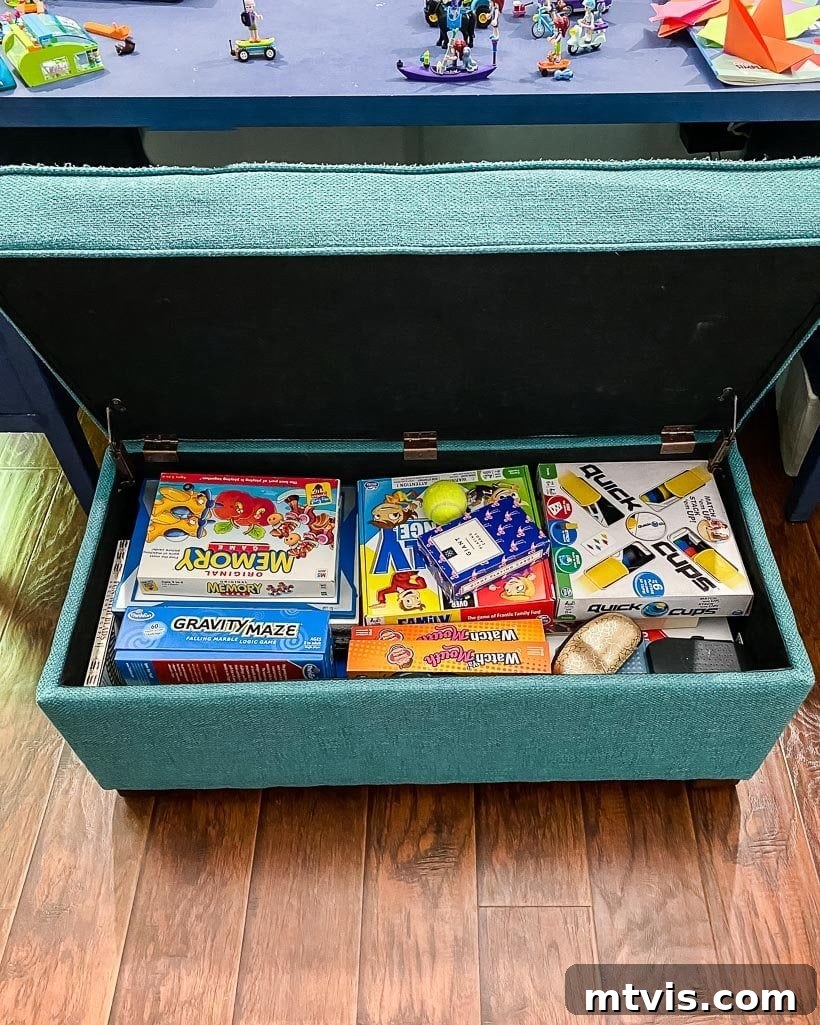
- Create a Dedicated Toy Zone (if no playroom): If your home doesn’t feature a separate playroom, establish a designated area within your living room for children’s toys and games. In our previous home, we utilized a corner of our family room to store many of their items. When your living room must serve dual purposes, incorporating practical and aesthetically pleasing organization solutions, such as storage benches or decorative bins, becomes incredibly important to contain the mess and maintain an orderly space.
Tips for Maintaining a Clutter-Free Home
That was a considerable amount of information on how to declutter your home, wasn’t it? As we conclude, remember this fundamental truth: decluttering is a marathon, not a sprint. Any progress you make, even if it’s just 10 minutes a day when you find the time, is a job well done. It’s unrealistic to expect to magically declutter your entire home in a single weekend or even a month, unless you enlist professional help. For 99% of us, this gradual approach is both normal and necessary.
Moreover, understand that decluttering is never truly “done,” even after you’ve tackled every space. You will always need to manage “daily clutter” such as mail, clothes, and toys. However, you will reach a point where maintaining your home’s order can be achieved with just 10 minutes a day (or an hour a week, if you prefer a weekly routine). If you consistently set aside that small amount of time to address daily clutter as it enters your home (a family command center can be incredibly helpful here!), you’ll effectively prevent your home from ever returning to a state of overwhelm.
Beyond managing existing clutter, proactively prevent new accumulation. Before purchasing anything new, ask yourself two crucial questions: Do I genuinely need this item? And, where will its permanent home be? If you can’t confidently answer both questions, it’s best to leave the item at the store. This mindful approach to consumption is key to sustained clutter-free living.
Once you feel your clutter is under control and your home flows more smoothly, you can then shift your focus to deeper organization and, my personal favorite, decorating your home! I have a wealth of interior design tips ready for you when you reach that exciting stage!
Other decluttering and organizing posts you may enjoy:
- How to Conquer the Emotions of Decluttering
- Linen Closet Organization: 7 Simple Tips for a Pretty and Functional Linen Closet
- How to Organize Your Life With Work + Kids
- Coat Closet Organization for Under $100
- How to Get Rid of Paper Clutter & Go (Mostly) Paperless
- Simple Playroom Storage Ideas to Keep the Mess to a Minimum
- Genius Garage Storage Ideas To Get You Organized
Curious about my unique approach to transforming rooms and spaces in our home? Discover Designer in a Binder® for an affordable and simple way to decorate your home.
And for exclusive content and behind-the-scenes sneak peeks, be sure to subscribe before you go!
Sign up here for exclusive content!