
Welcome, design enthusiasts! One of the most common questions I hear, and a delightful challenge for many homeowners, is how to masterfully mix interior design styles within a single home. It’s a truly pertinent query, touching on both practical and aesthetic considerations.
Perhaps you’re embarking on the exciting journey of cohabitation, striving to blend your cherished decor pieces with those of a significant other. Or maybe budget constraints mean a complete overhaul isn’t feasible, prompting a need to gracefully transition between existing styles. Many also encounter this dilemma when a beloved, inherited, or simply irresistible piece of furniture doesn’t quite align with their current room’s aesthetic, leaving them puzzled about how to incorporate it seamlessly.
Here’s the liberating truth: there are absolutely NO rigid rules dictating that you must confine your home to a single interior design style. The beauty of modern interior design lies in its flexibility and embrace of individuality. Imagine a sleek mid-century modern end table standing confidently beside a whimsical Louis Ghost chair. Envision a rustic, handcrafted dining table anchoring a traditionally styled dining room. Or consider exposed brick walls that don’t demand an exclusive reclaimed barn wood theme. The secret isn’t strict adherence, but rather employing a few clever techniques to harmonize your unique, unconventional combinations!
For many of us, our home is far more than just a dwelling; it’s our sanctuary, our happy place, and a canvas for our personal narrative. You naturally want your interior design choices to authentically reflect who you are—your tastes, your travels, your memories. The goal is to create a cohesive and inviting space that radiates beauty, all while allowing your distinct personality to shine through (and not, as you might fear, descending into chaos). If there’s an item you genuinely adore, a piece that sparks joy, rest assured, there’s always a way to integrate it into your evolving design story.
Furthermore, let’s be pragmatic: furniture and decor can be significant investments. It’s simply not practical, or even desirable, to completely redecorate every time you fall in love with a new rug, a captivating piece of art, or a unique antique. The wonderful news is, you don’t have to undertake such a monumental task! You possess the power to absolutely mix and match interior design styles in your home, achieving a look that is both sophisticated and personal, rather than mismatched or bizarre.
By following these straightforward guidelines, you can effortlessly combine and incorporate your favorite pieces, transforming your home into a harmonious reflection of your journey. Prepare to unlock the potential of your living spaces as we delve into my top tips for expertly mixing interior design styles!
Create Unity with Color: The Ultimate Harmonizer
Color is arguably the most powerful tool in your design arsenal when it comes to creating visual unity. A thoughtfully chosen color scheme can miraculously bring together diverse shapes, forms, and styles. Imagine a vibrant, playful sofa or a uniquely shaped accent chair; these can become powerful focal points. To achieve this, repeat elements of their dominant color in other parts of the room – perhaps a piece of abstract art, a decorative vase, a collection of books, or stylish throw pillows. By keeping the surrounding palette muted or neutral, you empower these standout items to truly make an impactful statement, drawing the eye and establishing a visual rhythm throughout the space.
Consider a mid-century style living room filled with an assortment of “eclectic” pieces. By adhering to a consistent color family for the majority of the room – perhaps various shades of grey, beige, or soft blue – and then introducing strategic pops of a unifying accent color, like turquoise, throughout, you create an undeniably cohesive look. The turquoise might appear in a cushion, a small sculpture, a lampshade, or even a subtle pattern in a rug, tying everything together.
Moreover, color can be a fantastic tool for transforming the perception of traditional pieces. A fresh coat of bright, unexpected paint can instantly modernize an antique chest, a classic wooden chair, or an ornate mirror, giving it a funky and contemporary edge. When incorporating these bold, bright colors, temper their intensity with a neutral palette on adjacent or surrounding pieces. This balance prevents the room from feeling overwhelmed. Remember to repeat the accent color in at least three different spots within the room; this ‘rule of three’ helps distribute the color and reinforces the sense of unity without being monotonous. Experiment with exciting combinations: think vibrant fuchsia or electric turquoise paired with a soothing soft mint; a rich ruby red contrasted with elegant soft blue, sophisticated grey, or earthy khaki; a bold poppy orange alongside cool, dusty greens, blues, and corals; or a sunny bright yellow balanced with classic navy, sleek grey, dramatic black, or deep maroon.
Source: Emily Henderson
Link Styles with a Few Deliberate Pieces
Picture this scenario: you possess several traditional pieces, characterized by their muted colors and classic, often curved, lines. Now, you’re eager to infuse some modern, sleek flair into the space. The natural inclination might be to worry that a single contemporary item would look glaringly out of place, like a “sore thumb.” However, the magic happens when you introduce not just one, but a few modern items strategically placed throughout the room. This thoughtful scattering creates an undeniable sense of cohesiveness and intentionality, rather than accidental disparity. This strategy is particularly invaluable for newlyweds combining households, seeking to merge two distinct interior design styles into one harmonious home.
Instead of allowing your partner’s cherished, lonely modern armchair to stand by itself, give it some “buddies.” Complement it with a modern-designed lamp, a geometric-patterned rug, or a striking piece of contemporary art. The key is to ensure that while the styles differ, the underlying color palette remains within the same family, or at least harmonious, providing a subtle thread that connects everything. For instance, in a contemporary kitchen and living room setting, traditional elements with their understated colors and classic curves can blend seamlessly with sleek, modern designs. The success lies in the deliberate inclusion of a few pieces from each style, creating a dialogue between the old and new. A traditional farmhouse table might be paired with modern ghost chairs, while sleek kitchen cabinetry could be adorned with vintage-inspired hardware. This balance makes the fusion feel considered and sophisticated.
Photo by STEPHEN FLETCHER ARCHITECTS
Photo by Andrew Flesher Interiors
Use Art to Combine Styles: A Visual Bridge
One of the most dynamic and versatile elements in interior design is art. Whether it’s compelling wall art, an intriguing sculpture, or a collection of prints, art possesses an extraordinary ability to serve as a visual bridge, uniting a wide spectrum of interior design styles. Imagine introducing a bold abstract or minimalist modern art piece into a room furnished predominantly with traditional, ornate furniture. The contrast creates visual interest, challenging expectations and infusing the space with contemporary energy. Conversely, pairing a classic landscape painting or a vintage portrait with sleek, modern furniture can soften the room’s edges, adding warmth, history, and a touch of unexpected charm. In essence, thoughtfully mixing art styles prevents a room from appearing overly “themey,” predictable, or cliché, pushing it towards a more sophisticated and layered aesthetic.
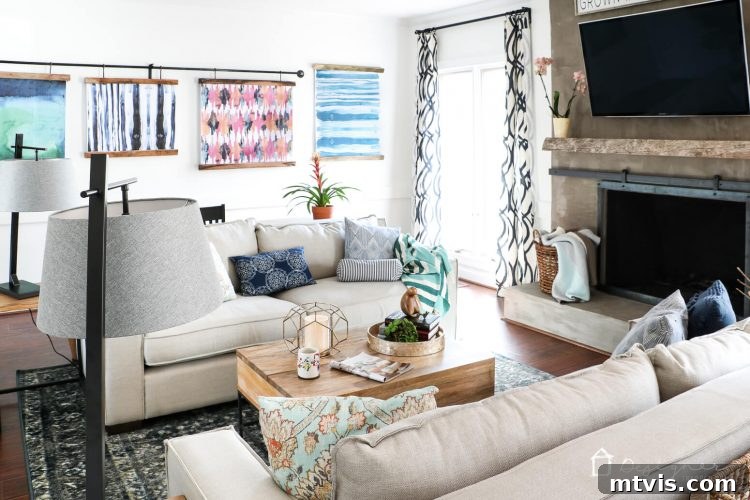
Consider a living room that harmonizes rustic elements with contemporary industrial styles. This blend can be achieved through strategic art placement. For instance, contemporary graphic prints, especially when housed in frames crafted from reclaimed wood, can cleverly tie together disparate elements. The rustic frames connect to natural wood features like a fireplace mantel or exposed beams, while the contemporary prints align with a modern couch and minimalist lamp. Furthermore, elements like a pole and “slide” hanging feature for artwork can inject an industrial sensibility, echoed by the design of lamps, curtain rods, or even a fireplace screen. This layered approach demonstrates how art, combined with mindful material choices, can create a rich, integrated narrative within a space. (Psst – you can find the tutorial for the hanging reclaimed wood frames here and the DIY barn door style steel fireplace door here).
Embrace Eclecticism: The Bohemian Approach
When in doubt, leaning into an eclectic and funky decorating style offers unparalleled flexibility, far more than strictly adhering to classic traditionalism or stark modernism. Eclecticism thrives on the deliberate combination of various styles, eras, and textures to create a truly unique and personalized space. The key is thoughtful curation. Begin by introducing diverse texture combinations: pair the robustness of hard, blocky furniture with the softness of plush fabrics, or the sleekness of polished surfaces with the organic irregularity of natural materials. Utilize rich fabrics and textiles—think velvet throw pillows, linen drapes, or a textured area rug—to make individual pieces stand out while contributing to an overall sense of layered comfort.
Don’t shy away from the unexpected. This could mean something as creative as covering a simple wooden chair with a vibrant fabric, or adding a whimsical beaded chandelier to a minimalist room. While encouraging bold choices, remember the unifying power of color: keep your core color scheme cohesive, perhaps relying on a neutral base, but bravely introduce strategic “pops” of color throughout the room to inject energy and personality. The true heart of bohemian and eclectic design lies in showcasing your individual story. Incorporate fascinating items from your travels, display meaningful photographs, or arrange cherished collections to highlight your eclectic personality and create a space that feels deeply personal and inviting.
A currently trending aesthetic, Scandinavian Bohemian (or “Scandi Boho”), perfectly exemplifies the power of versatility. This style marries the clean, minimalist lines and functional elegance of Scandinavian design with the free-spirited, textural richness of bohemian decor. It’s a sublime pairing where modern Nordic simplicity seamlessly integrates with retro and vintage pieces, natural textures like rattan and jute, and quirky, artsy accessories. This fusion creates a calming yet character-filled environment, proving that contrasting styles can not only coexist but flourish together.
Photo by STEFANI STEIN
Combine Textures for Depth and Interest
When it comes to blending interior design styles, texture is an often-underestimated element that can create incredible depth and cohesion. The good news is that almost all natural textures inherently “go” together, offering a rich tapestry of sensory experiences. Think about mixing the warmth of various woods—even if they are different tones—with the cool gleam of metallic accents. Combine the inviting softness of a fuzzy throw blanket draped over a sleek leather sofa, or the organic appeal of a rattan chair with the delicate beauty of a blown glass vase. Rough-hewn stone pairs beautifully with the transparency of glass, while different types of natural woods (like oak, maple, or walnut) can sit harmoniously side-by-side, their unique grains adding character. However, exercise a bit more caution when mixing *finished* woods of vastly different tones, as they can sometimes clash more noticeably.
To further enhance the textural richness of your space, incorporate a variety of fabrics: luxurious silks, soft and breathable cottons, or the rustic charm of nubby burlap. Don’t forget the vital role of living plants, which introduce organic shapes, vibrant greens, and natural textures, bringing life and freshness into any design. By intentionally layering different textures—from smooth to rough, hard to soft, matte to glossy—you create a sophisticated and inviting environment that appeals to more than just the visual sense. These contrasts stimulate interest and prevent a room from feeling flat or one-dimensional. A great example is an industrial farmhouse kitchen, bustling with tactile elements: the raw grain of wood, the sleek stainless-steel refrigerator, the smooth coolness of countertops, and an array of steel and metal accents. This seemingly disparate collection marries so beautifully precisely because the natural textures, in their raw and refined forms, combine seamlessly to create a rich, inviting, and highly functional space.
Photo by Elle Interiors, Ellinor Ellefson
Employ the 80/20 Ratio: The Golden Rule of Blending
When embarking on the exciting journey of combining interior design styles, a fundamental principle to guide your choices is the 80/20 balance. This magic ratio suggests that approximately 80% of the room’s elements should adhere to one primary, dominant style, while the remaining 20% should be drawn from the contrasting or secondary style you wish to introduce. This strategic approach ensures that the secondary style is prominent enough to make a deliberate statement without overwhelming the primary aesthetic, maintaining a harmonious and balanced environment. Deviating from this ratio, for instance, aiming for a 60/40 or 50/50 split, often leads to a space that feels less intentional, more disjointed, and ultimately, confusing. The 80/20 ratio serves as your target for creating a professional and polished mixed-style look.
This powerful formula can be observed beautifully in various settings. Consider a modern country kitchen: the designer might opt for an 80% country aesthetic—evident in the shaker cabinetry, a farmhouse sink, or rustic wood flooring—then skillfully integrate 20% modern elements, such as sleek pendant light fixtures, contemporary bar stools, or gleaming stainless-steel appliances. The result is a fresh, updated country feel that doesn’t sacrifice its roots. Conversely, imagine a living room where the look is cleverly flipped: 80% modern design, characterized by clean-lined, minimalist sofas, a geometric coffee table, and abstract artwork. The 20% country influence could manifest in subtle yet impactful ways, such as a set of decorative deer antlers above the fireplace, a vintage-inspired television console crafted from reclaimed wood, or a cozy, chunky knit throw. In both scenarios, the adherence to the 80/20 rule ensures that the blend feels deliberate, sophisticated, and utterly cohesive, rather than a jumble of competing ideas. It’s about creating a conversation between styles, where one graciously leads while the other adds intriguing accents.
Photo by Mark Williams Design Associates
Photo by Alexander James Interiors
Repeat Graphic Patterns for Visual Flow
Graphic patterns, especially bold ones like animal prints or strong geometric designs, possess a surprising ability to integrate seamlessly with more classic interior styles, adding an unexpected layer of sophistication and playfulness. When selecting patterns, look for those with clear, strong lines or repetitive motifs. Bold black and white prints, striking florals, or precise geometric and repetitive patterns are excellent choices for creating visual impact and cohesion. Animal print, often considered a “neutral” in design circles, is remarkably versatile and can inject interest and a touch of wild elegance into almost any decor scheme. The trick lies in finding unifying colors within the patterns or ensuring they share a similar color temperature. Combine one dominant, bold graphic print with smaller, simpler patterns or solid colors to prevent the space from feeling too busy. The repetition of patterns, even subtly, creates a visual rhythm that guides the eye through the room and reinforces stylistic connections.
Consider a modern farmhouse interior that masterfully uses graphic patterns. The bold, sharp lines of a black and white area rug, for instance, can perfectly complement and amplify the graphic quality of a modern stair railing or the striking geometry of exposed beams in the ceiling. This deliberate repetition of linear elements, whether in textiles, architectural features, or furniture, expands the perceived size of the room and instantly lends it a contemporary, well-designed feel. It’s about creating echoes of shape and form throughout the space, making the various elements feel like part of a larger, intentional design narrative. From wallpaper to cushion covers, and even the lines of a coffee table, repeating graphic motifs is a subtle yet powerful way to unify diverse styles and infuse a room with personality and polish.
Photo by Gardner Homes
Watch Size and Scale: The Foundation of Balance
Beyond the harmonious interplay of color and texture, the meticulous consideration of size and scale is absolutely critical for achieving cohesion when mixing interior design styles. Imagine a massive, overstuffed armchair or a monumental, solid buffet placed amidst a collection of delicate, more feminine pieces. Such a disparity in scale would render the large item foreboding and utterly out of place, disrupting the visual flow and balance of the room. The goal is to ensure that items, while perhaps differing in style, maintain a similar visual weight and are scale-friendly, allowing them to coexist gracefully and play nicely together within the space. This doesn’t mean everything must be the same size, but rather that there’s a thoughtful progression and balance in their proportions.
A clever strategy to combine a myriad of styles, especially with smaller items, is through grouping. By arranging small, curated objects together—perhaps a collection of unique vases, art books, or travel souvenirs—you create an intentional display that adds visual interest and weight to any area of the room. This grouping makes individual disparate items feel part of a cohesive collection, preventing them from looking like random clutter. Furthermore, understanding scale helps in creating focal points; a single oversized piece, if balanced by smaller items around it, can become a stunning anchor without overpowering the room.
Observe, for instance, a contemporary bedroom corner where a classic mid-century Lane-style end table takes center stage. This historically distinct piece feels remarkably fresh and deliberately placed because its scale is perfectly aligned with everything surrounding it. Next to a significantly larger lamp, heavier accessories, or an overly bulky bed, this delicate table would simply disappear, losing its charm and impact. However, when paired with items of compatible scale and visual weight, it holds its own, contributing elegance and a touch of vintage flair to the contemporary setting. Paying close attention to how pieces relate to one another in terms of size and proportion is paramount to creating a mixed-style interior that feels intentional, sophisticated, and beautifully balanced.
Photo by Amber Interiors
Embrace Your Inner Designer: Making It Work!
See? It truly is an incredibly fun and rewarding experience to combine different interior design styles and witness them come together harmoniously! If you find yourself struggling to achieve the perfect look, don’t get discouraged. Take a step back and revisit these fundamental principles. Re-evaluate your 80/20 ratio – is one style unintentionally dominating too much, or are they battling for supremacy? Carefully observe the scale and size of your furniture and decorative elements – do they complement each other, or are some pieces feeling lost or overwhelming? Most importantly, ensure you’re utilizing unifying colors to bridge the stylistic gaps and create a cohesive visual narrative.
Sometimes, the solution can be counter-intuitive: taking something away can have a surprisingly positive effect. A room might simply be too cluttered, or a single item might be disrupting the balance. It could simply be a matter of a small adjustment—rearranging a vignette, swapping out a pillow, or even moving a piece of art to a different wall—to make everything click into place. So, experiment! Play around with different configurations, move items between rooms, and don’t be afraid to try unconventional pairings. Design is an iterative process, and often the best results come from exploration and a willingness to adjust.
Rest assured, you absolutely CAN successfully mix interior design styles in your home. In fact, when done thoughtfully, this approach often yields results that will not only meet but far exceed your expectations, creating a living space that is uniquely yours, brimming with personality, and radiating an inviting warmth that only a truly personalized home can offer. Dare to blend, and watch your vision come to life!
