
This post is proudly sponsored by Mohawk Consumer Products. As always, all opinions expressed are 100% my own, reflecting my genuine experience with Mohawk’s exceptional products.
In a world where comfort meets budget, few things are as vital to our homes as a beloved couch. It’s the centerpiece of our living spaces, witnessing countless movie nights, heartfelt conversations, and relaxing afternoons. However, the reality is that high-quality furniture comes with a significant price tag, making frequent replacements an impractical dream for most of us. This financial investment underscores the importance of maintaining your existing couch, ensuring it remains a comfortable and attractive fixture in your home for as long as possible. If your couch has started to show its age, looking tired and worn (much like mine was), you’ve come to the right place. I’m excited to share a comprehensive guide on not just how to make an old couch look brand new again, but also how to protect that refreshed appearance so it endures for many years.
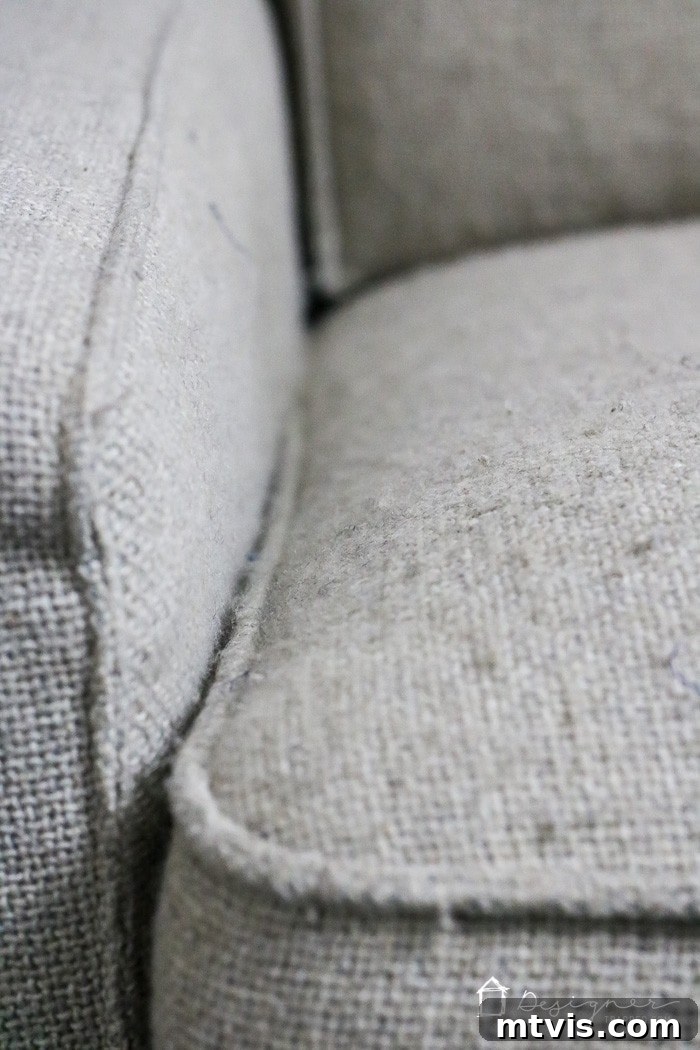
Let me give you a little backstory. Our loveseat, a cherished piece, was originally purchased from a well-known home furnishings store. While it wasn’t the most expensive item we’ve ever bought, it certainly represented a substantial enough investment that we are committed to extending its life as much as humanly possible. We fell in love with its charming “tweedy” fabric, which added a wonderful texture to our room. What we didn’t fully anticipate, however, was the primary drawback of this particular weave: its propensity to pill. Over time, those tiny, unsightly fabric pills began to accumulate, transforming a once lovely piece into something that looked neglected and worn. The good news? You absolutely can breathe new life into your old couch by systematically removing all the pills from its upholstery and then safeguarding the fabric. The entire process is surprisingly quick, often taking as little as 10-15 minutes for a significant transformation. And the subsequent protection step? Even simpler! Pinky promise. This post contains some affiliate links for your convenience. Click here for my full disclosure policy.
Transform Your Tired Couch: A Step-by-Step Guide to a Fresh Look
Revitalizing your couch involves two primary steps: depilling the fabric and then applying a protective guard. Both steps are straightforward and incredibly effective. Below, you’ll find the essential materials and detailed instructions to achieve a stunning transformation.
Essential Materials for Your Couch Makeover:
- Mohawk Fabric Guard: When it comes to protecting my upholstery, I exclusively recommend and use Mohawk Fabric Guard. My preference stems from several key benefits: 1) It boasts an incredibly fast drying time, often as little as 10 minutes, meaning minimal downtime for your furniture. 2) It offers robust, comprehensive protection against a wide array of spills and stains, including water, oil, and other common household culprits. 3) Crucially, it’s formulated without bleach and harsh chemicals, making it a safer choice for your home and family. This advanced formula creates an invisible barrier that helps liquids bead up on the surface, allowing for easy wipe-away cleanup before they can penetrate and set into the fibers.
- Fabric Shaver: Over the past decade, I’ve experimented with numerous fabric shavers, and I can confidently say that this particular model is, by far, my absolute favorite and the one I consistently use. It strikes the perfect balance between affordability and outstanding performance. Its ergonomic design makes it comfortable to hold and maneuver, allowing you to efficiently remove pills without straining your hand. The powerful motor and sharp blades swiftly and safely trim away unsightly fabric pills, leaving your upholstery smooth and revitalized.
Step 1: Thorough Upholstery Cleaning – The Foundation of a Fresh Couch
Before you begin the exciting transformation of depilling and protecting, it’s absolutely crucial to ensure your upholstery is impeccably clean. This foundational step prepares the fabric, allowing the shaver to work effectively and the fabric guard to bond properly, ensuring the best possible results. Here’s how to approach it based on your couch type:
- For Slipcovered Couches: If your couch features removable slipcovers, consider yourself fortunate! This makes deep cleaning significantly easier. Carefully remove all slipcovers. Check the care label for specific washing instructions. While many labels might suggest “dry clean only,” I’ll confess that with our Ikea loveseat, we opted to wash them at home on a gentle cycle with cold water and a mild detergent, and they turned out perfectly fine. A word of caution: if you choose this route, absolutely do NOT put them in the dryer. High heat can cause shrinkage or damage. Instead, air dry them completely by hanging them or laying them flat. If your slipcovers are made of a very delicate or sensitive fabric, or if you prefer to err on the side of caution, professional dry cleaning is always a reliable option.
- For Permanent Upholstery: If your couch features fixed upholstery, a different approach is needed. Begin by thoroughly vacuuming every inch of your couch, using upholstery attachments to reach into crevices, seams, and under cushions. This removes loose dirt, dust, and debris. For any noticeable spots or stains, use a high-quality fabric cleaner specifically designed for upholstery. Always spot-test the cleaner in an inconspicuous area first to ensure it doesn’t cause discoloration or damage. Apply the cleaner according to the product’s instructions, typically by dabbing and blotting rather than rubbing. Allow the couch to dry completely before proceeding to the next step. A clean surface is paramount for achieving a truly rejuvenated look.
Step 2: Effortless Depilling – Restoring Fabric Smoothness
Once your couch is thoroughly clean and dry, it’s time to tackle those frustrating fabric pills. This is where your fabric shaver becomes your best friend. The process is remarkably simple and satisfying:
- Preparation: Ensure your fabric shaver has fresh batteries or is fully charged. Empty its lint trap before you begin. For best results, work on one section of the couch at a time, perhaps a cushion or a armrest.
- Technique: Gently stretch the fabric taut with one hand. With the other hand, lightly press the fabric shaver against the surface and move it in small, circular motions or in straight, overlapping strokes. Avoid pressing too hard, as this can potentially damage the fabric. Let the shaver do the work. You’ll visibly see the pills being lifted and collected in the device’s lint trap.
- Consistency is Key: Continue this process over the entire surface of your couch that has pilling. Pay special attention to high-traffic areas like armrests, seat cushions, and the back where people lean. Periodically stop and empty the lint trap to maintain optimal performance. The speed at which you see the transformation will truly amaze you!
Step 3: Long-Lasting Protection – Guarding Against Future Stains and Wear
After your couch is smooth and pill-free, the final, crucial step is to protect your newly refreshed upholstery. This ensures its beauty endures and makes future cleaning significantly easier. This is where Mohawk Fabric Guard shines:
- Ventilation is Vital: Before you begin spraying, ensure your space is well-ventilated. Open windows and doors, or apply in an outdoor area if feasible.
- Application Method: Hold the can of Mohawk Fabric Guard upright, approximately 6-8 inches away from the fabric surface. Apply an even, light mist across the entire upholstered area. Do not saturate the fabric; a light, uniform coat is all that’s needed. Overlap your sprays slightly to ensure complete coverage.
- Drying Time: As mentioned, one of the best features of Mohawk Fabric Guard is its rapid drying time – typically around 10 minutes. However, for full effectiveness and to allow the protective barrier to properly cure, it’s wise to allow a bit more time, perhaps 30-60 minutes, before heavy use. For optimal, long-lasting protection, a second light coat can be applied after the first has fully dried.
- Benefits of Protection: This invisible barrier acts as a shield against everyday spills and stains. Liquids will bead on the surface, giving you precious time to blot them away before they can soak into the fibers. This protection significantly extends the life and pristine appearance of your couch, making it more resilient against the trials of daily life.
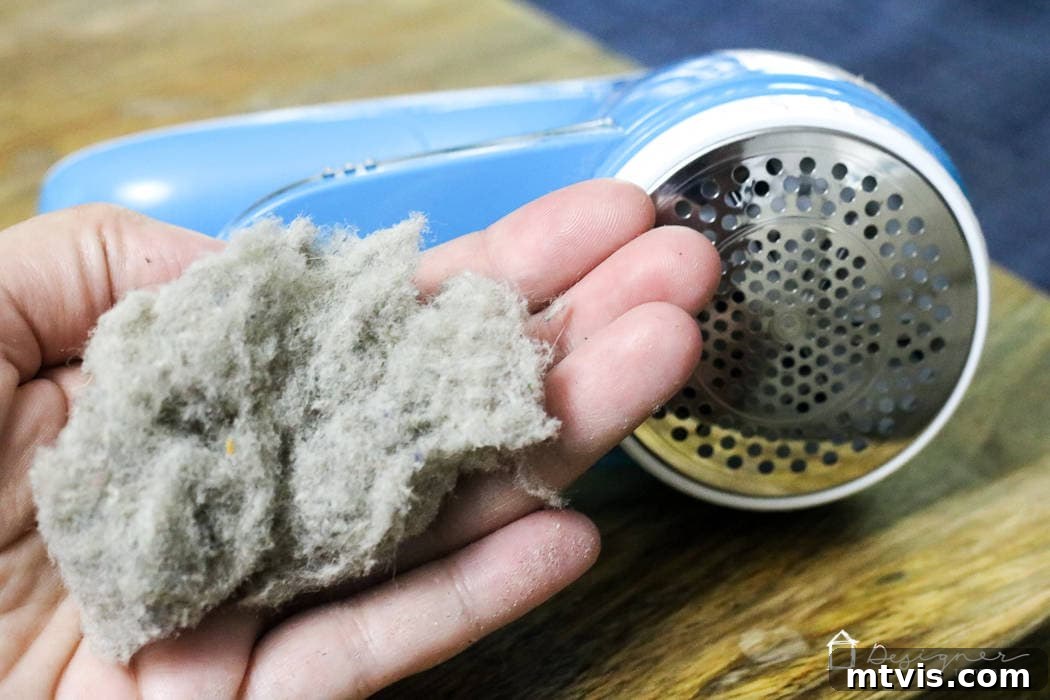
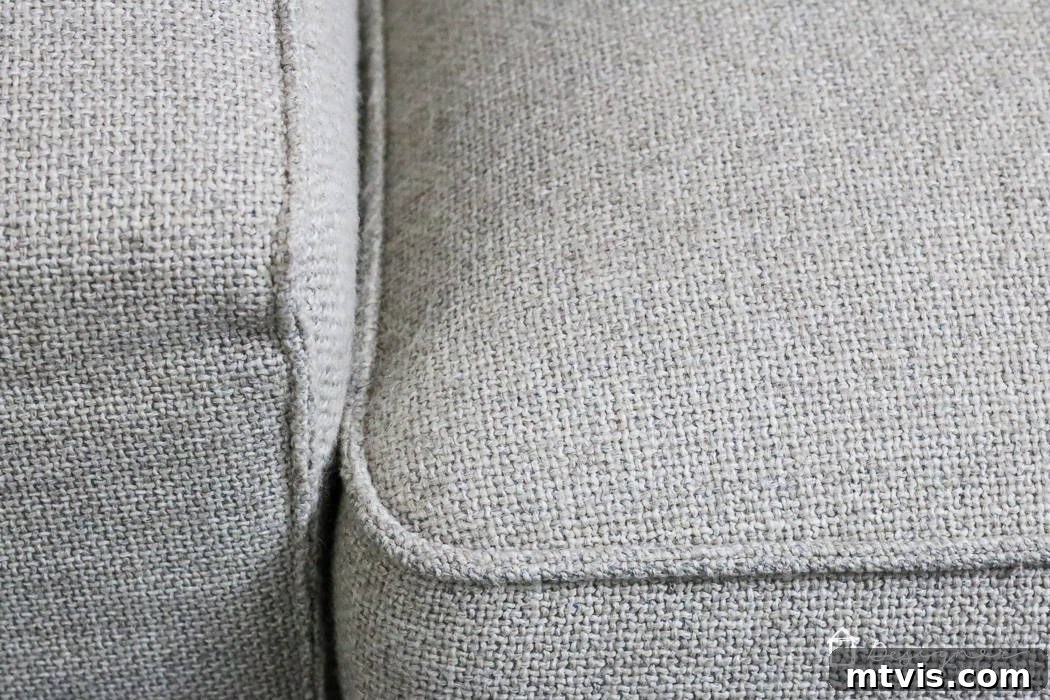
BEFORE: Close-Up of Pilled Fabric
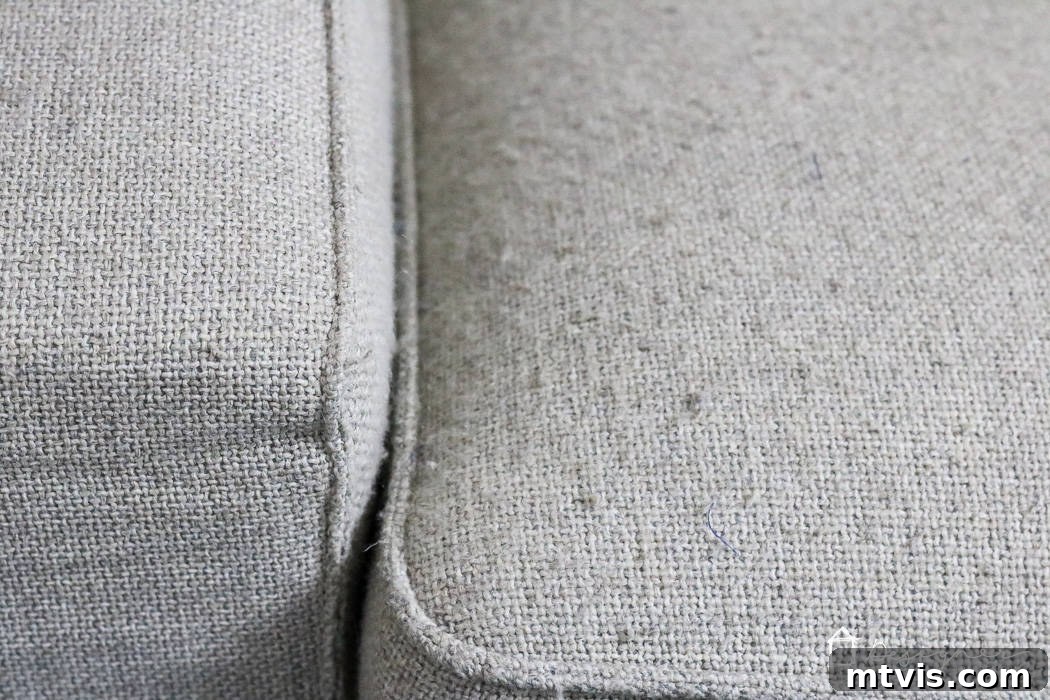
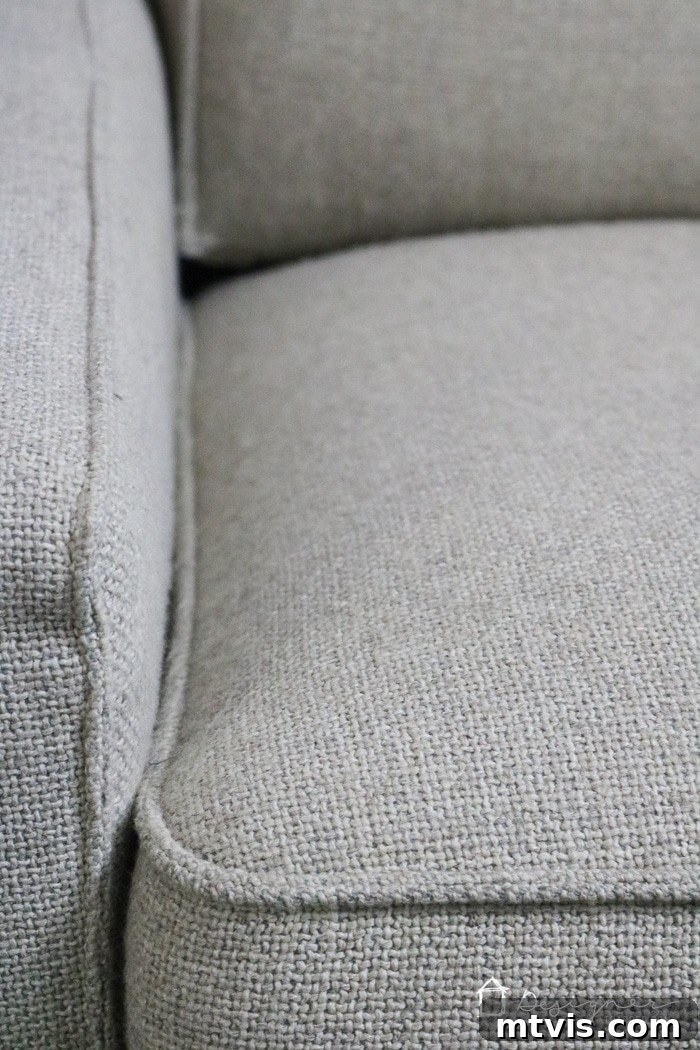
AFTER: Smooth, Refreshed Upholstery
BEFORE: Full Couch Perspective with Pilling
AFTER: Full Couch Perspective, Rejuvenated
Beyond the Makeover: Maintaining Your Couch’s Fresh Look
Achieving a renewed look for your couch is a fantastic accomplishment, but preserving that fresh appearance requires a little ongoing care. By incorporating these simple maintenance habits, you can significantly extend the life and beauty of your upholstery:
- Regular Vacuuming: Dust, crumbs, and pet hair can quickly dull your couch’s appearance. Make it a habit to vacuum your upholstery weekly using the appropriate attachments. This prevents debris from embedding deep into the fibers and helps maintain fabric integrity.
- Prompt Spill Cleanup: Even with a fabric protector like Mohawk Fabric Guard, immediate attention to spills is crucial. Blot liquid spills gently with a clean, white cloth, working from the outside in to prevent spreading. Avoid rubbing, as this can push the stain deeper or damage the fabric.
- Rotate Cushions Regularly: If your couch has removable cushions, rotate and flip them periodically. This ensures even wear and tear, preventing any single area from becoming flattened or overly worn. It also helps maintain the couch’s overall shape and comfort.
- Protect from Direct Sunlight: Prolonged exposure to direct sunlight can cause fabric to fade, weaken fibers, and sometimes even accelerate pilling. Position your couch away from direct sunbeams or use blinds/curtains during peak sunlight hours.
- Reapply Fabric Protector Periodically: Over time, the protective barrier of fabric guard can diminish due to regular use and cleaning. Consider reapplying Mohawk Fabric Guard every 6-12 months, or as needed, especially in high-traffic areas, to maintain optimal stain resistance.
Conclusion: Embrace a Revitalized Home
Giving your old couch a new lease on life is more than just a home improvement project; it’s an act of sustainability, a smart financial decision, and a wonderful way to refresh your living space. You don’t need to break the bank to enjoy beautiful, comfortable furniture. With just a few simple tools and a bit of effort, you can transform a tired, pilled couch into a piece that looks, feels, and functions like new. The satisfaction of seeing such a dramatic before-and-after in your own home is truly priceless. So, gather your materials, follow these steps, and prepare to fall in love with your “new” couch all over again!
