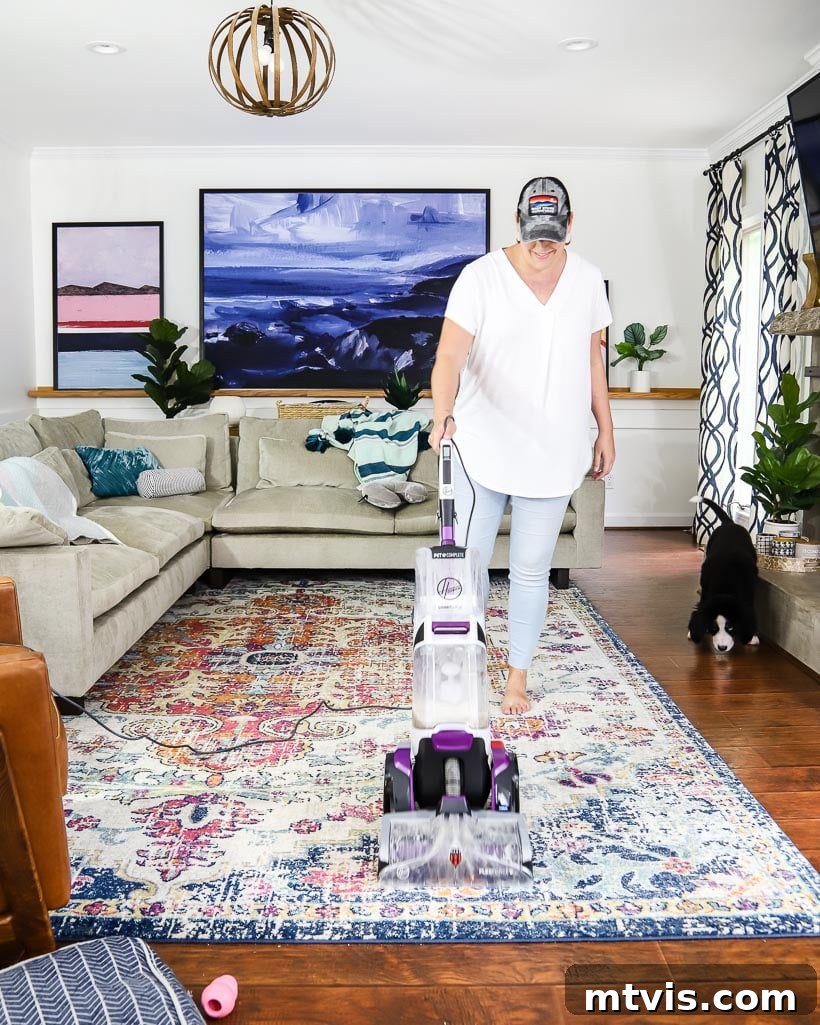
Could your area rugs benefit from a thorough cleaning? The answer is almost certainly yes. As an enthusiastic advocate for area rugs, I understand their transformative power in a home – adding warmth, color, and defining spaces. However, I also know firsthand how quickly they accumulate dirt, dust, and grime from daily foot traffic, spills, and the antics of pets and children. Even if your rug doesn’t visibly appear dirty, it’s silently collecting debris deep within its fibers, making regular vacuuming insufficient over time. A deeper clean is essential to maintain its beauty and hygiene.
The good news is that revitalizing your area rug is often far simpler than you might imagine, and it’s a task you can confidently tackle yourself. Having incorporated area rugs into every room of my home, including carpeted spaces, I’ve gathered extensive experience in effective rug cleaning. This guide shares my straightforward yet highly effective methods designed to keep your area rugs looking vibrant and smelling fresh for years to come.
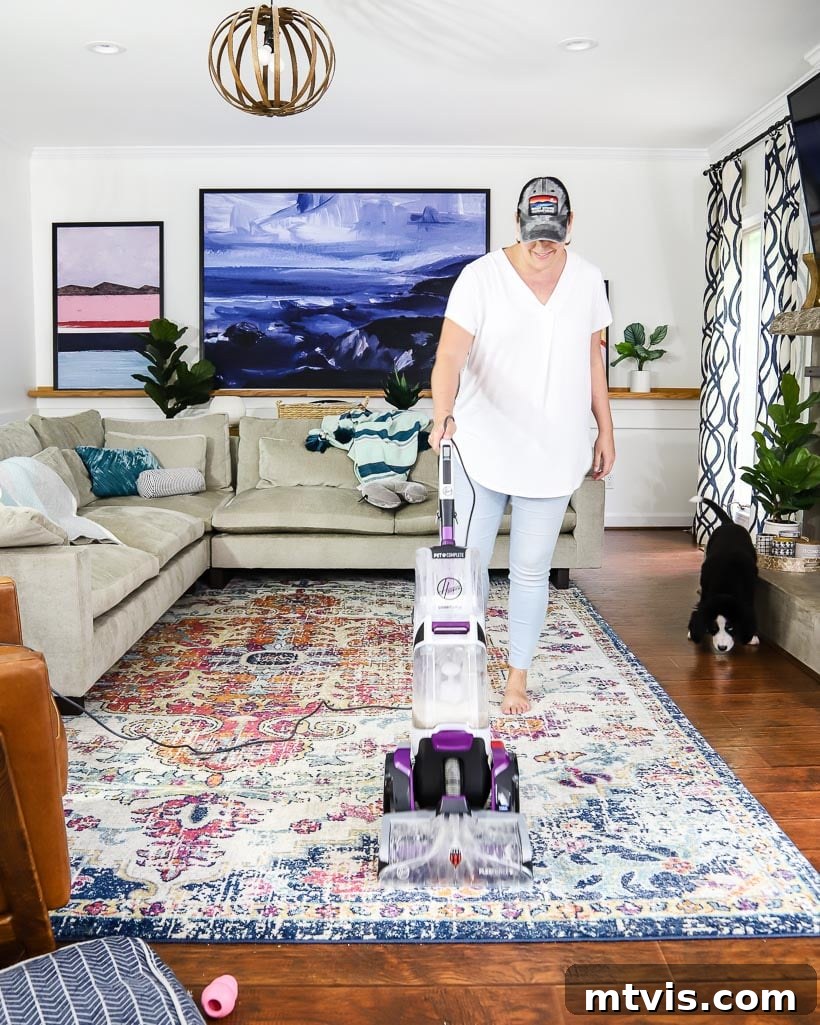
Table of Contents
- Can I Clean My Area Rug Myself?
- Does It Matter What My Rug Is Made Of?
- Natural Fiber Rugs: Delicate Care
- Synthetic Fiber Rugs: Durable and Versatile
- What Is the Best Way to Clean an Area Rug?
- Vacuum Your Rug Regularly
- Cleaning Stains and Spills
- Deep Cleaning Your Area Rug With a Rug Cleaner
- Essential Drying Tips for Area Rugs
- More RUG Posts
Can I Clean My Area Rug Myself?
For most modern area rugs, the answer is a resounding yes! You generally don’t need to incur the expense of hiring a professional rug cleaner or sending your rug to a specialized dry cleaner. DIY rug cleaning is not only cost-effective but also offers the convenience of refreshing your rugs on your own schedule. However, there are exceptions. If you own antique rugs, heirloom pieces, or rugs made from exceptionally delicate and valuable materials, professional cleaning is highly recommended to ensure their preservation and prevent potential damage. These specialists have the expertise and equipment to handle intricate fibers and dyes safely.
But for the vast majority of rugs purchased from popular retailers like Target or online stores (you can explore our collection of colorful rugs here), cleaning them yourself is entirely feasible. This guide focuses on practical, at-home methods suitable for indoor rugs that do not require specialized professional care. By following these simple steps, you can significantly extend the life and beauty of your everyday area rugs, keeping them fresh and inviting without breaking the bank.
Does It Matter What My Rug Is Made Of?
Absolutely, the material of your area rug plays a crucial role in determining the most appropriate cleaning method. Treating a natural fiber rug the same way you would a synthetic one can lead to damage, shrinking, or color fading. Always identify your rug’s composition before applying any cleaning solutions.
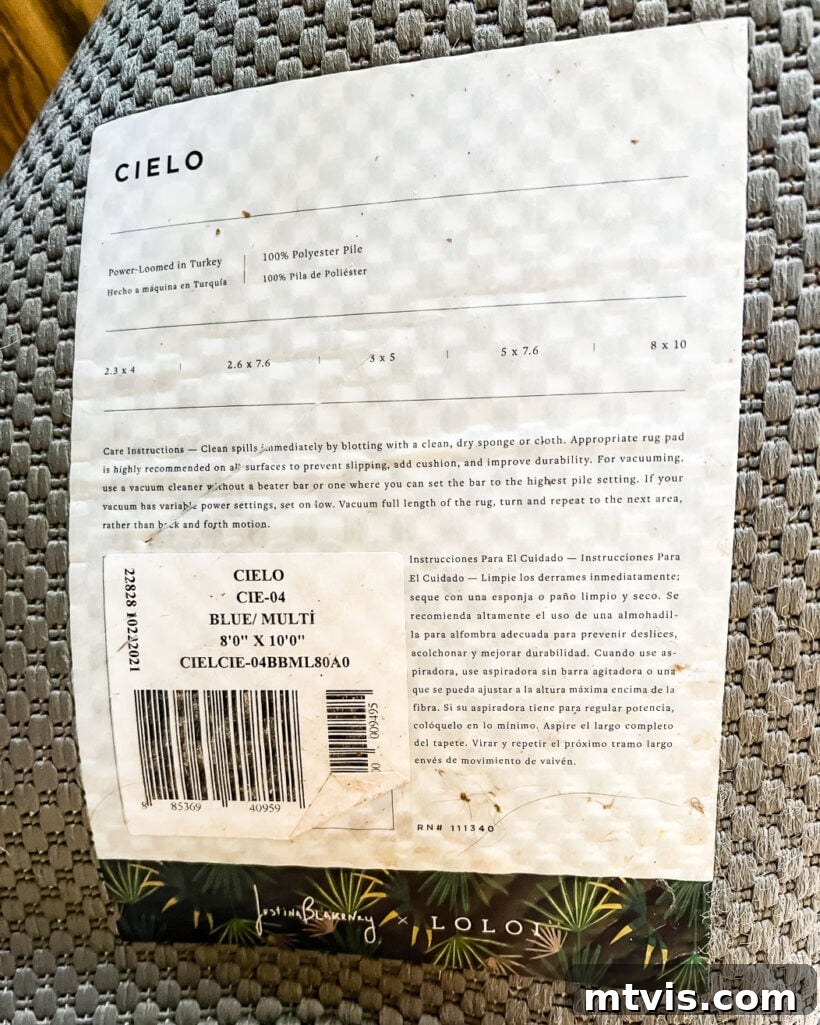
If you’re unsure about your rug’s material, always check the underside for a label or tag. This label typically lists the fiber content and often includes specific cleaning instructions from the manufacturer. Adhering to these guidelines is the best way to ensure a safe and effective cleaning process.
Natural Fiber Rugs: Delicate Care
Natural fiber rugs, such as those made from wool, cotton, silk, jute, or sisal, require a gentler approach. Wool rugs, for instance, are known for their durability and natural stain resistance, but they can shrink or bleed colors if exposed to excessive heat or harsh chemicals. Cotton rugs are soft and absorbent, but also prone to shrinking and color running. Jute and sisal rugs, derived from plant fibers, are highly absorbent and should be cleaned with minimal moisture to prevent mildew and damage. For all natural fibers, the key is to use cold or lukewarm water and mild, pH-neutral cleaning solutions. Avoid aggressive scrubbing, which can damage fibers, and always blot spills rather than rubbing. Rapid drying is also critical to prevent moisture-related issues like mold or mildew, especially for jute and sisal.
Synthetic Fiber Rugs: Durable and Versatile
Conversely, synthetic rugs, commonly made from materials like nylon, polyester, or polypropylene (olefin), are much more resilient. These fibers are designed to be durable, stain-resistant, and can generally withstand hotter water temperatures and stronger cleaning solutions or detergents. This makes them ideal for high-traffic areas and homes with pets and children. When cleaning synthetic rugs, you typically have more flexibility with cleaning products and methods, including many commercial carpet cleaners. However, even with synthetic rugs, it’s always a good practice to spot test any new cleaning solution in an inconspicuous area first to ensure there’s no adverse reaction or discoloration. Their robust nature makes them excellent candidates for DIY deep cleaning with carpet cleaning machines.
This post contains affiliate links for your convenience. Click here for my full disclosure policy.
What I Use
Here are links to the essential tools and products I personally use and recommend for cleaning area rugs effectively. Click on any image for detailed product information.
[Product showcase goes here, e.g., images with links to recommended cleaning solutions, vacuums, and carpet cleaners]
What Is the Best Way to Clean an Area Rug?
Maintaining the cleanliness and appearance of your area rugs involves a combination of regular care and occasional deep cleaning. By incorporating these practices into your routine, you can keep your rugs looking their best, prevent premature wear, and ensure a healthier living environment.
Vacuum Your Rug Regularly
Regular vacuuming is the foundational step in any effective rug cleaning and maintenance strategy. It’s crucial for removing superficial dirt, dust, pet dander, and other loose debris that can quickly accumulate and become embedded in the rug’s fibers. Neglecting this step allows particles to work their way deep into the rug, causing premature wear and dulling its appearance.
For rugs in light-traffic areas, a thorough vacuuming once a week is usually sufficient. However, for high-traffic zones, such as entryways, living rooms, and hallways, or in homes with pets and children, aim for at least twice a week. When vacuuming, move slowly and methodically, making overlapping passes in different directions to ensure you capture as much debris as possible. Don’t forget to use the upholstery attachment for edges and fringes. If your rug is reversible or thin enough, vacuuming the underside can also help dislodge trapped dirt, pushing it to the surface where it can be easily removed. For delicate rugs, consider using a vacuum with adjustable suction or a non-beater bar setting to prevent fiber damage. Regular vacuuming not only preserves your rug’s aesthetics but also contributes to better indoor air quality.
Cleaning Stains and Spills
Accidents happen to everyone. In my own home, I confess to being the chief culprit of spills, having splattered everything from coffee to paint on our carpets and rugs more than once. This experience has, thankfully, made me quite adept at stain removal. The most critical rule for successful stain removal is to act immediately and avoid panic. The longer a spill sits, the harder it is to remove.
First, address the excess spill. Use a clean, dry white towel or paper towels to blot as much of the liquid or semi-solid as possible. The key here is to blot, not rub. Rubbing pushes the substance deeper into the fibers and can spread the stain, making it more challenging to remove and potentially damaging the rug’s pile. Continue blotting gently from the outside of the stain inwards until no more moisture transfers to the towel.
For oil-based spills, such as grease or oil, sprinkle a generous amount of cornstarch or baking soda over the affected area. These powders absorb the oil, drawing it out of the fibers. Let it sit for 15-30 minutes, then gently scrape away the dried powder and blot up any residue with a dry cloth. Afterward, lightly dampen the spot with warm water and blot thoroughly with clean towels to rinse.
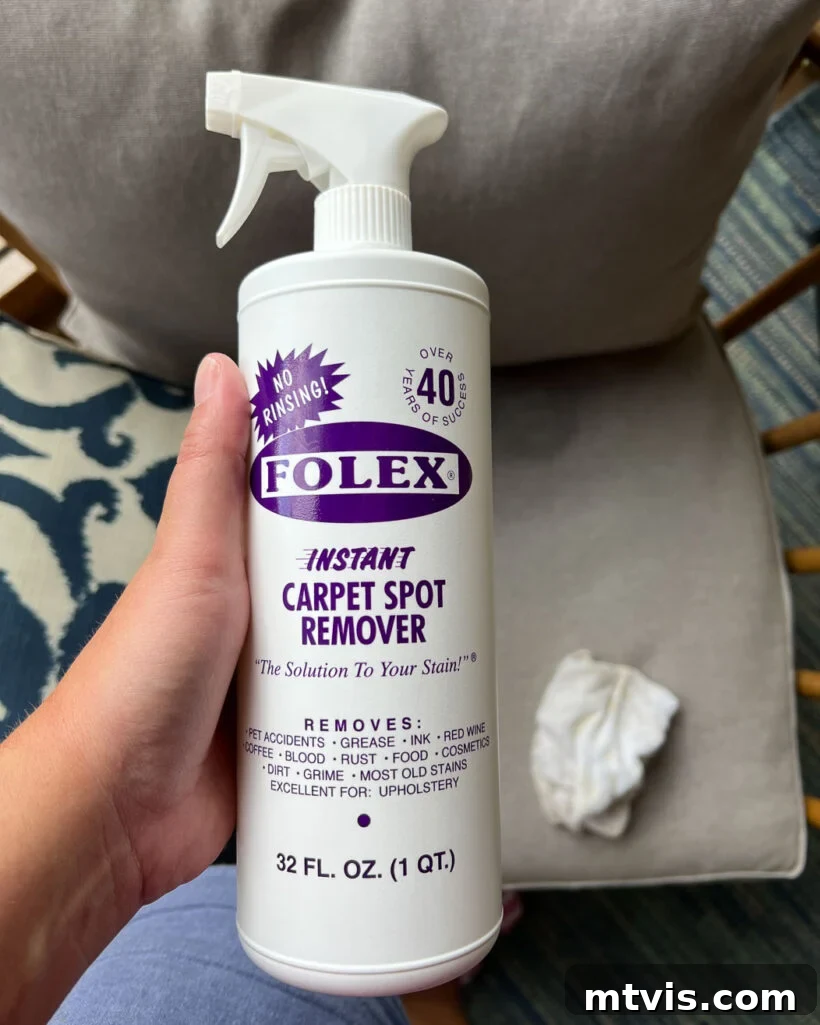
Once you’ve blotted away as much of the initial spill as possible, I highly recommend using Folex Instant Carpet Spot Remover. It’s incredibly affordable and works wonders on a wide range of stains. As I mentioned, Folex has successfully removed paint from my rugs every single time, which speaks volumes about its effectiveness. Before applying any cleaner to the entire stain, always perform a spot test on an inconspicuous area of your rug to ensure colorfastness and prevent any unintended discoloration or damage.
Deep Cleaning Your Area Rug With a Rug Cleaner
Beyond routine vacuuming and spot treatment, deep cleaning your area rugs at least once a year is crucial for removing embedded dirt, allergens, and refreshing their overall appearance. For rugs in homes with heavy traffic, pets, or allergies, consider deep cleaning every six months. I can assure you, this process is neither time-consuming nor difficult, and the best part is the significant savings you’ll achieve by doing it yourself instead of hiring professionals.
I personally use this carpet cleaner to deep clean all the area rugs in our home, including our wool and cotton rugs, and have done so for years. My enthusiasm for this machine is entirely genuine – it’s not a sponsored endorsement, just a heartfelt recommendation from a very satisfied user. In fact, it’s one of my top suggestions for keeping a home clean with dogs. Its reasonable price point means it has paid for itself many times over, saving us a considerable amount compared to regular professional cleanings or even frequent rentals. The convenience of having it on hand whenever a rug needs refreshing is invaluable, and I appreciate the added hygiene of knowing it’s only been used in our home. If purchasing a machine isn’t an option, renting a carpet cleaner from a local hardware or grocery store is a viable alternative, just be sure to purchase a compatible carpet shampoo.
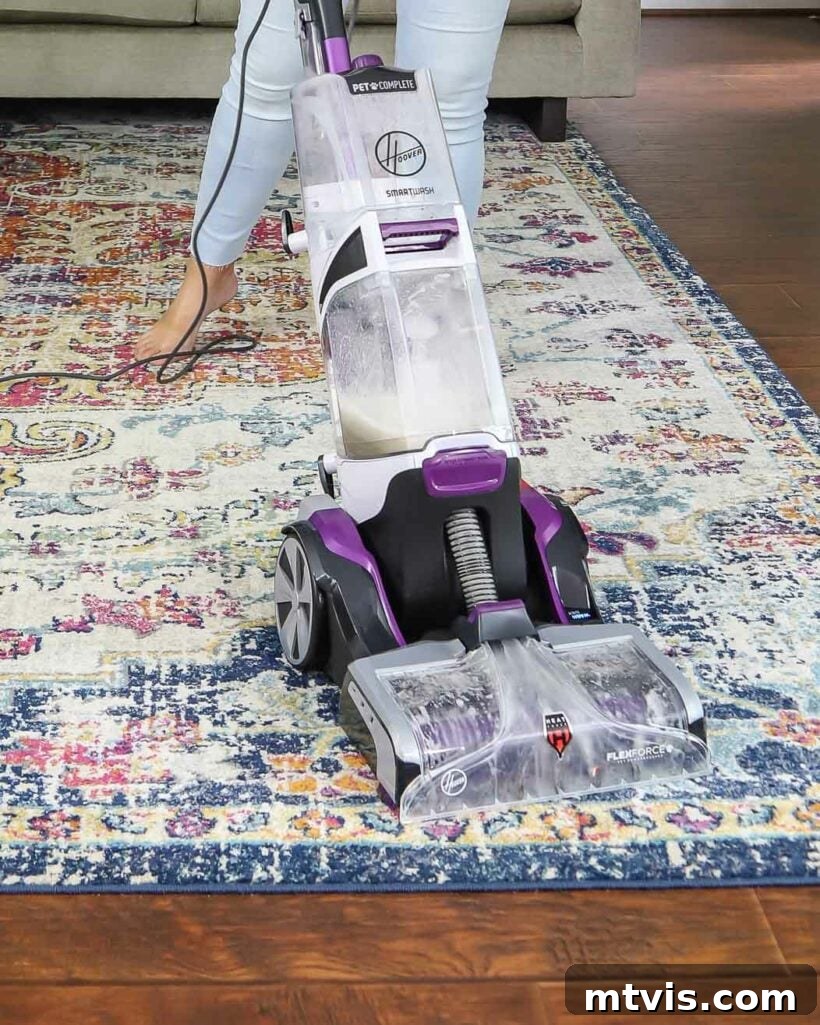
Before you begin the deep cleaning process, always vacuum your rugs thoroughly, ideally from multiple directions. This pre-cleaning step removes loose dirt and debris, ensuring the carpet cleaner can focus on the deeper grime and preventing solid particles from clogging the machine or getting ground into the fibers during washing.
Using the Hoover SmartWash Carpet Cleaner is as straightforward as vacuuming, though you’ll want to move at a slightly slower pace to allow the machine to work its magic. The beauty of this particular cleaner lies in its simplicity: one tank holds your cleaning solution, and another holds plain water for rinsing. As you push the cleaner forward, it automatically dispenses the cleaning solution and gently scrubs the rug fibers. As you slowly pull the machine back, it rinses the rug with water and simultaneously extracts the dirty water and excess moisture. This dual-action process is incredibly efficient and deeply satisfying to watch. Seeing the dark, murky water collected in the recovery tank is a stark visual testament to just how much embedded dirt and grime your rugs were harboring!
This process is truly magical! You’ll be amazed at how much dirt is extracted from your area rugs. While seeing the dirty water is quite gross, the satisfaction of knowing your rugs are truly clean makes it all worthwhile.
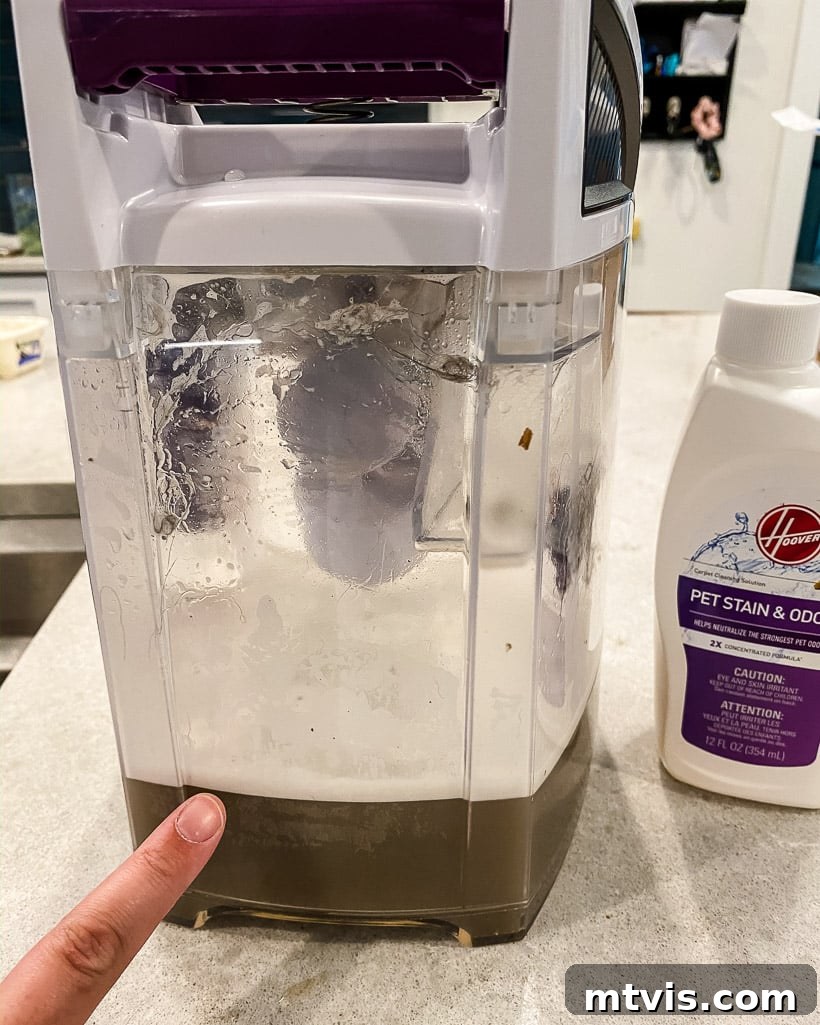
I typically use this Hoover carpet cleaning solution with our machine and have consistently achieved excellent results without any issues. However, regardless of the cleaning solution you choose, it is paramount to always perform a spot test on a small, inconspicuous area of your rug first. This ensures that the solution won’t cause discoloration, damage, or unwanted reactions with your rug’s fibers or dyes.
Essential Drying Tips for Area Rugs
After deep cleaning, proper drying is just as crucial as the cleaning itself. Leaving a rug damp can lead to unpleasant odors, mildew growth, and even damage to the rug’s backing or the flooring underneath. To expedite the drying process, first, ensure that your carpet cleaner has extracted as much water as possible. Many machines have a “dry only” or “extra extraction” setting that you can use after cleaning passes. Once the machine has done its part, open windows and doors to increase air circulation in the room. If possible, direct fans or a dehumidifier towards the rug. For smaller rugs, you can hang them over a railing or sturdy clothesline (out of direct sunlight to prevent fading) to allow air to circulate around both sides. Avoid placing furniture back on the rug until it is completely dry, which can take anywhere from a few hours to a full day, depending on humidity levels and air flow. A fully dry rug will feel uniformly dry to the touch and won’t have any lingering dampness or musty smells.
So there you have it! Cleaning an area rug doesn’t have to be an overwhelming or intimidating task. While cleaning an outdoor rug involves a slightly different process, it’s equally manageable. With a consistent routine of regular vacuuming, prompt stain treatment, and an annual deep clean, you’ll ensure your area rugs remain beautiful, fresh, and a welcoming feature in your home year after year!
Other posts you may enjoy:
- How to Clean Leather Furniture and Protect It
- The Best Ways to Keep Your House Clean With Dogs
- DIY Tip to Keep Your Sofa Looking Brand New
More RUG Posts
SEE ALL rug POSTS
-
Designer Tips for Choosing Perfect Kitchen Rug Runners
-
How to Choose the Best Rug Size for Your Living Room
-
How to Install a Stair Runner: A Step-by-Step Tutorial
-
How to Keep Rug Corners Down – Tips and Tricks for Every Homeowner
-
The Best Places to Shop for Affordable Rugs
-
The Rug Pad Guide: What You Need to Know Before You Buy
Wondering how I approach transforming rooms and spaces in our home? Check out Designer in a Binder®.
And if you want exclusive content and behind-the-scenes sneak peeks, be sure to subscribe before you head out!
Sign up for our newsletter to receive exclusive content, DIY tips, and behind-the-scenes sneak peeks directly in your inbox!